








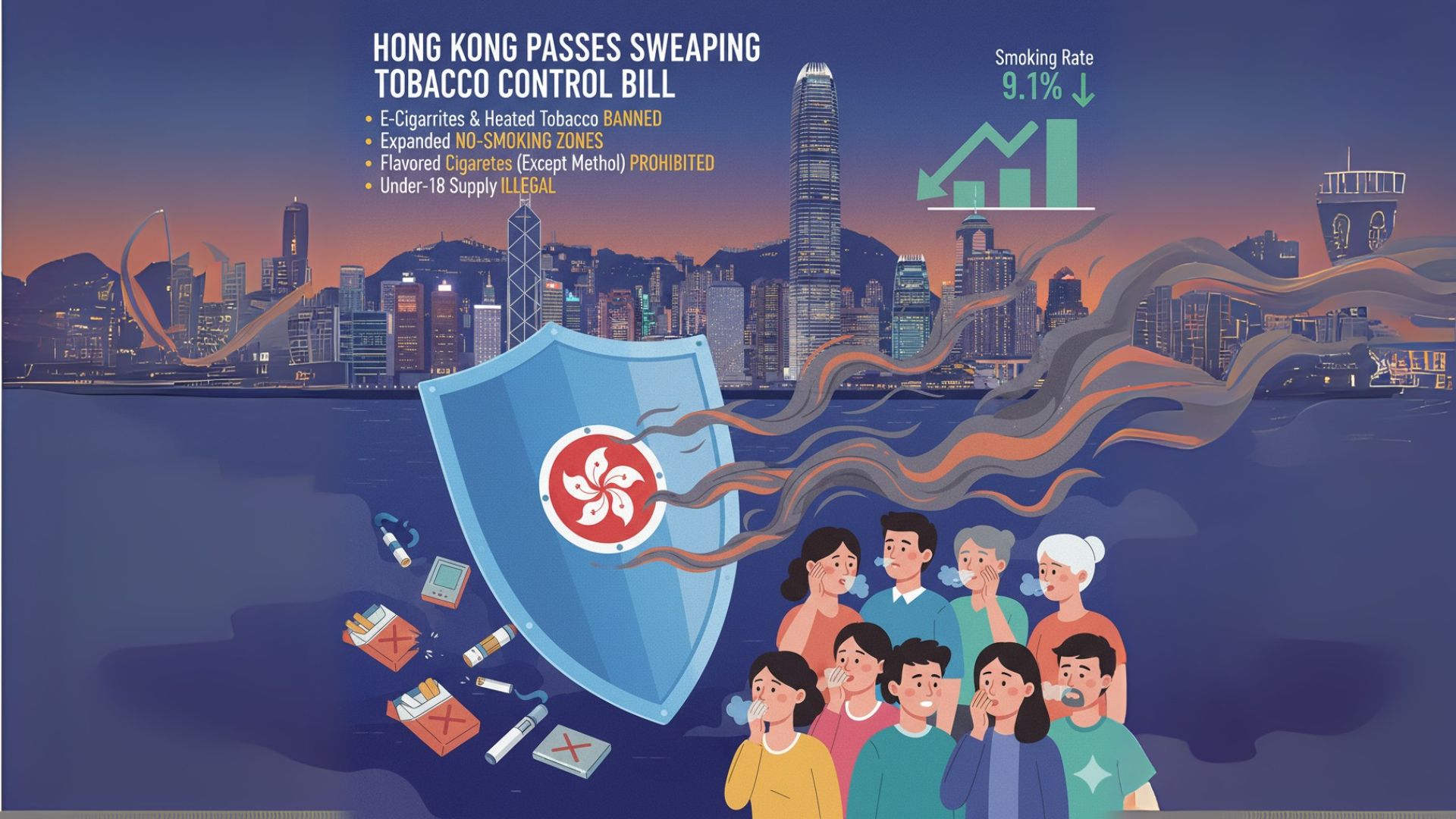
Hong Kong’s Legislative Council overwhelmingly passed the Tobacco Control Legislation (Amendment) Bill 2025 on Thursday, introducing stringent measures to reduce smoking rates and protect public health. The bill, approved with 74 votes in favor, one against, and seven abstentions, bans possession of alternative smoking products like e-cigarettes and heated tobacco, expands no-smoking zones in public areas, and prohibits selling flavored cigarettes, except menthol.
The legislation also makes it illegal to supply tobacco products to anyone under 18, tightening existing regulations to shield younger generations from nicotine addiction. Lawmakers rejected amendments from two council members seeking to delay or soften the measures, signaling strong support for the government’s push to drive down the city’s smoking rate, currently at 9.1%, or roughly 580,000 smokers.
Health Secretary Lo Chung-mau, a former frontline doctor, championed the bill as a critical step toward a healthier Hong Kong. “I have witnessed too many tragedies that could have been avoided,” Lo said, reflecting on the toll tobacco takes on families. “Tobacco control is like rowing against the current – if we don’t move forward, we fall back. Today, we have taken an important step forward and reached a new milestone.”
The bill’s passage follows years of debate over balancing public health with personal freedoms. Supporters argue the measures will deter youth smoking and reduce secondhand smoke exposure. Adrian Ho, a lawmaker, dismissed concerns that the restrictions would harm tourism, pointing to stricter controls in Singapore and South Korea. “These measures give people the impression that our city is clean, with fresh air, and that gives tourists a better experience,” Ho said.
Chu Kwok-keung, representing the education sector, highlighted the risks of flavored e-cigarettes, which he said are designed to entice young people. “These products are deliberately packaged to mislead youth into believing they’re not addictive,” Chu said, urging stronger protections for the city’s younger residents.
The legislation builds on Hong Kong’s ongoing efforts to curb smoking, with expanded no-smoking areas now covering more public spaces, including parks and transit hubs. Violators of the new possession and sales bans could face fines or other penalties, though enforcement details are still being finalized.
Public health advocates hailed the bill as a landmark victory, while critics, including the lone dissenting voter, argued it infringes on personal choice. With smoking rates already among the lowest in the region, Hong Kong’s government hopes the new measures will further reduce tobacco use, aligning the city with global trends toward stricter tobacco control.