






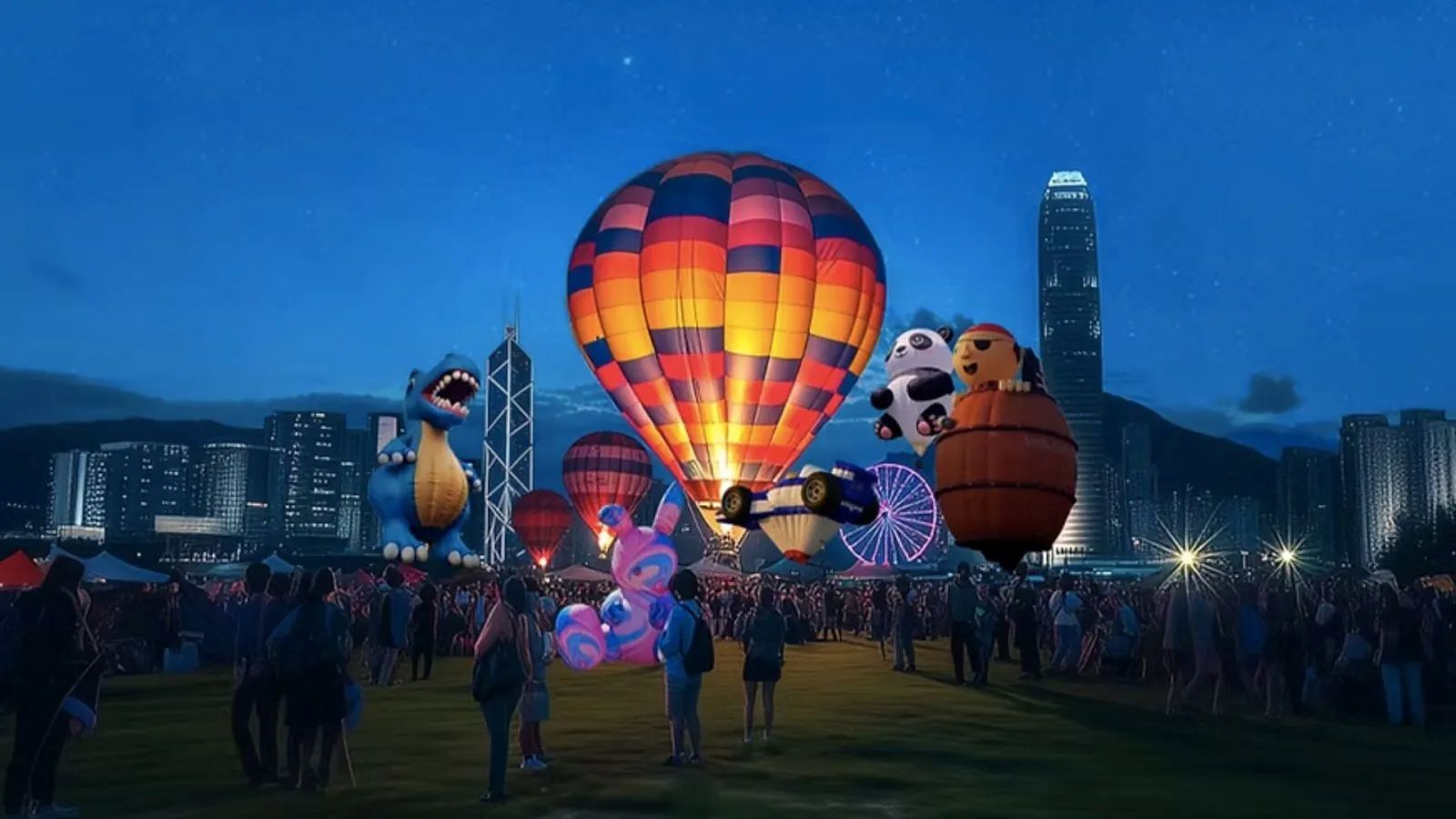
A much-hyped hot air balloon festival billed as a vibrant spectacle in Hong Kong collapsed into disarray, leaving thousands of attendees furious, vendors unpaid, and the city’s event-planning ambitions under scrutiny. The inaugural AIA International Hot Air Balloon Fest, held over four days at the Central Harbourfront, promised tethered balloon rides with stunning city views but canceled them on opening day, sparking widespread backlash and exposing organizational failures.
The event, organized by Grand Events Asia, descended into chaos due to the company’s failure to secure a government permit for the tethered rides, which were meant to lift visitors 10 to 20 meters above the waterfront. Government tests conducted weeks earlier revealed significant safety risks, citing the balloons’ instability in the harbor’s windy conditions. A last-ditch test a day before the festival also failed, restricting balloons to mere displays. The choice of the Central Harbourfront, flanked by towering skyscrapers and prone to strong winds, drew sharp criticism from experts who noted that inland venues are safer for such activities globally.
Attendees, who paid between HK$120 and HK$880 for tickets—plus an additional HK$580 for the promised rides—felt deceived by promotional materials that heavily touted the balloon experience. Initial refund requests were rebuffed, with Grand Events Asia citing “unforeseen government decisions.” Public outrage mounted, and by the festival’s end, Hong Kong’s Consumer Council reported over 260 complaints involving claims totaling HK$270,000. The event’s final day was further marred by Typhoon Tapah, which forced the cancellation of remaining activities, including a planned concert, leaving attendees even more disillusioned.
Behind the scenes, organizational turmoil plagued the festival. Insiders described frequent staff turnover, with a major team overhaul just days before the event. Planning was disorganized, with critical details like sponsorships and stall arrangements unresolved until the last minute. Food vendors, initially deterred by exorbitant fees, were only secured after steep discounts. Some partners pulled out, citing doubts about Grand Events Asia’s transparency and competence, particularly its lack of experience in managing large-scale or balloon-related events.
Under pressure from the event’s title sponsor, AIA Hong Kong, which emphasized customer satisfaction, Grand Events Asia reversed course and announced full refunds for all ticket holders, to be processed between September 9 and October 8. However, stakeholders, including vendors and partners, now face financial uncertainty, with estimates suggesting the organizer owes over HK$10 million. Fears of potential bankruptcy loom as doubts grow about the company’s ability to settle its debts.
Industry experts pointed to broader lessons, noting that Hong Kong’s summer typhoon season and high temperatures pose unique challenges for hot air balloons, which require stricter safety measures than helium or hydrogen balloons used in past local events. They stressed the need for early testing, transparent communication, and appropriate venues to avoid similar debacles.
The festival’s collapse has cast a shadow over Hong Kong’s aspirations to host mega-events, serving as a cautionary tale for future planners. As the city seeks to rebuild its reputation as a global events hub, the fallout from this ill-fated festival underscores the high stakes of meticulous planning and execution.