




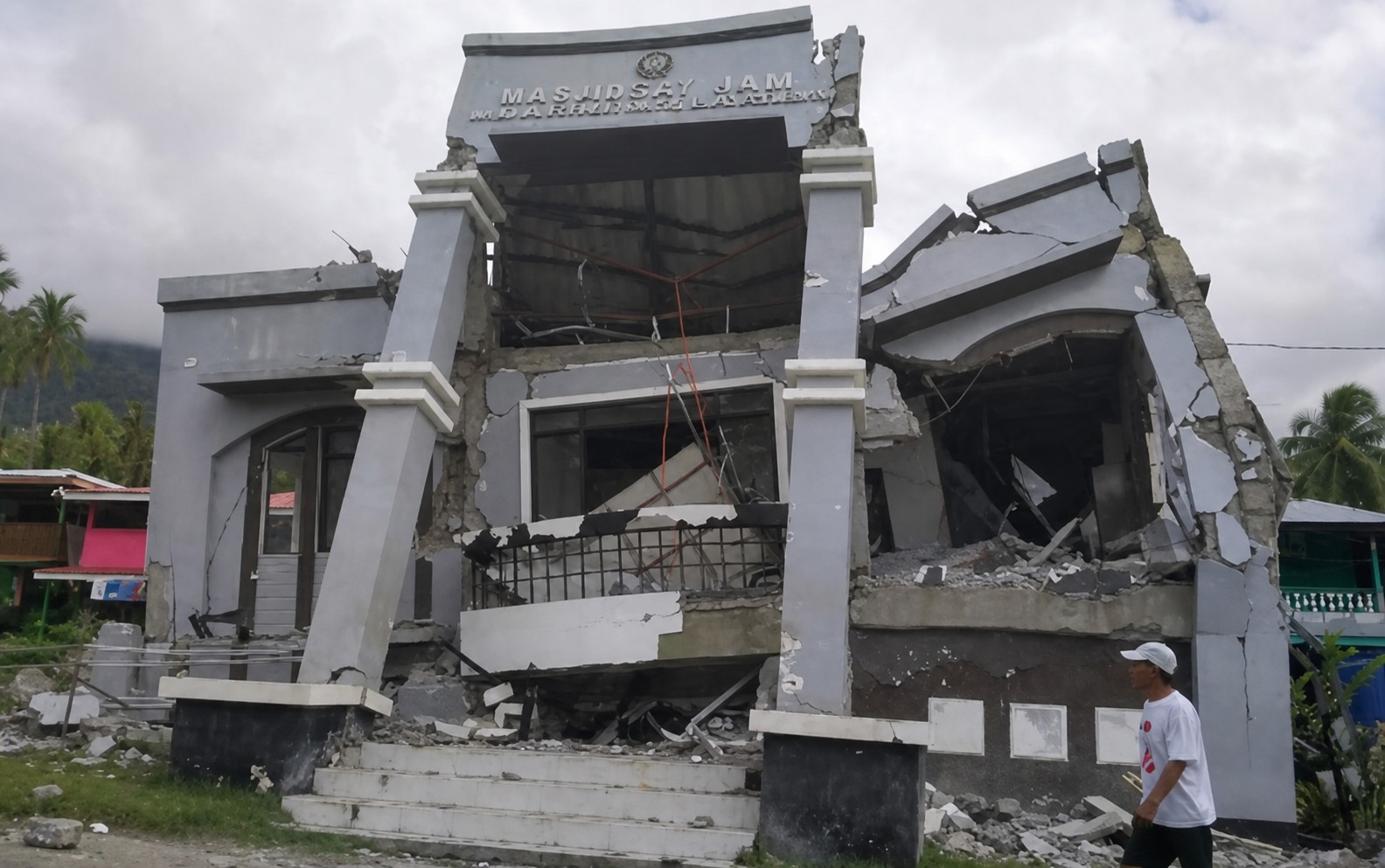
MANILA, Philippines — Damage to infrastructure from the powerful magnitude 7.8 earthquake that struck Maasim, Sarangani earlier this month has risen to 1.29 billion pesos ($22.9 million), the Office of Civil Defense (OCD) said Wednesday, as relief operations continue across hard-hit southern regions.
OCD information officer Diego Mariano said the number of damaged infrastructure units has reached 774, although further details were not immediately available.
Agricultural losses have also been reported, with damage estimated at 29.8 million pesos ($530,000) in the provinces of Davao del Norte and Davao del Sur.
Casualty figures remain under verification, with 68 reported deaths, 33 people missing, and 1,339 injured, according to the latest government data. Authorities said all casualties are concentrated in the Davao Region and Soccsksargen, areas closest to the earthquake’s epicenter.
The disaster has affected 339,254 families, or about 1.42 million people. Of these, 4,464 families — nearly 19,800 individuals — are currently staying in 45 evacuation centers.
The quake damaged 60,281 houses, including 13,652 that were completely destroyed, further straining local resources and shelter capacity.
Meanwhile, the Philippine Army said it has intensified humanitarian assistance and disaster response operations in isolated communities in Davao Occidental and Sarangani.
Army spokesperson Col. Louie Dema-ala said about 600 families received roughly 190 gallons of potable water from a mobile water purification unit in Sitio Linao, Barangay Tinoto, Maasim. Troops also helped distribute relief goods donated by civilian volunteers in Barangay Butulan, Jose Abad Santos.
In coordination with the Philippine Air Force, military teams carried out airlift operations to deliver essential supplies — including food packs, rice, bottled water, and other relief items — to remote villages.
From June 11 to 15, the air operations delivered approximately 4,925 food packs, 800 five-kilogram rice packs, 3,400 bottles of water, 400 boxes of relief goods, 100 containers of 20-liter potable water, and 40 cases of six-liter bottled water, Dema-ala said.
Additional ground efforts included transporting around 400 boxes of relief goods from General Santos City, assisting with logistics at distribution hubs, and facilitating aid from the Philippine Charity Sweepstakes Office through the General Santos City International Airport.
“The Philippine Army’s disaster response teams are working closely with national agencies and local governments to ensure sustained delivery of aid to affected communities,” Dema-ala said.