







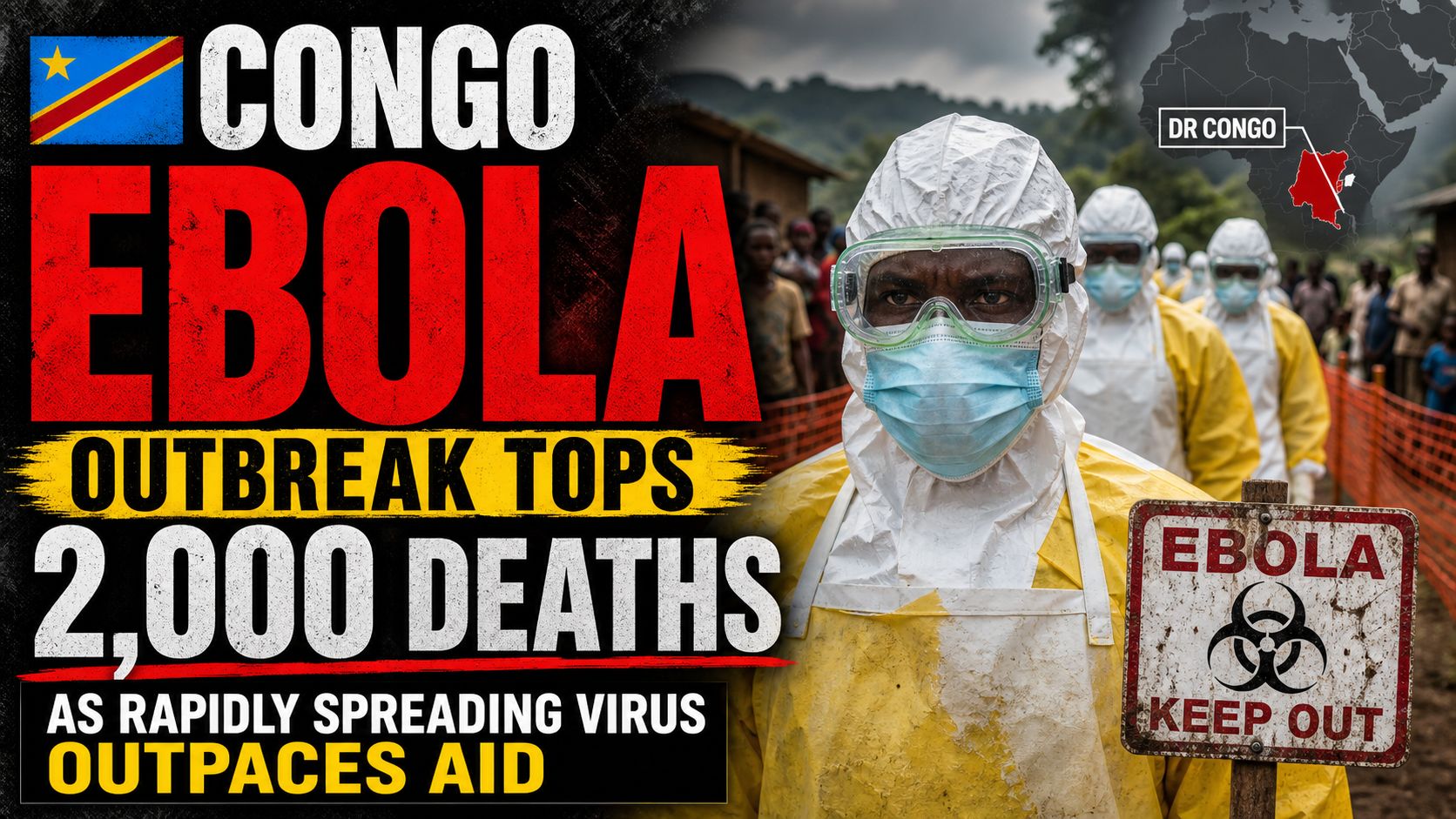
KINSHASA, Democratic Republic of the Congo — A rapidly accelerating Ebola outbreak in the Democratic Republic of the Congo has surpassed 2,000 deaths, driven by an unapproved viral strain, armed conflict, and severe logistical bottlenecks, health officials said Tuesday.
Government data released overnight showed 4,381 confirmed cases and 2,011 deaths, making it the second-deadliest Ebola outbreak in history and the fastest-growing on record.
While the outbreak reached its first 1,000 deaths in nine weeks, that figure doubled in just three weeks. The death toll was reached nearly three times faster than during the 2014–2016 West African epidemic, the largest on record, which killed more than 11,000 people.
First officially declared on May 15, genomic sequencing indicates the current outbreak actually began in February.
Unlike the more common Zaire strain behind the 2014 outbreak, the current crisis is caused by the rare Bundibugyo virus, for which there are no approved vaccines or treatments. Clinical trials for experimental vaccines and therapeutics have recently begun in eastern Congo’s Ituri province, the epicenter of the outbreak.
Response efforts across five affected eastern provinces have been severely undermined by ongoing rebel violence, impassable roads, and labor strikes by local health workers protesting unpaid wages.
The World Health Organization reported that a majority of new cases are occurring outside known contact-tracing lists, signaling that community transmission remains largely uncontrolled.
Late medical intervention has further driven up mortality. The current outbreak carries a case fatality rate of 45.9%, compared to 39.6% during the 2014–2016 epidemic.
“In the absence of an effective vaccine, control rests on identifying cases and then nursing them in secure facilities until they recover or sadly perish,” said Paul Hunter, a professor of medicine at the University of East Anglia in the U.K. He added that in conflict-affected, remote regions with poor infrastructure, early case detection “can be impossible.”
Local medical staff warn that health facilities are overwhelmed and under-resourced.
“We must not take this disease lightly, because it continues to kill and no one is safe,” said Dr. Jean-Marie Akandabo, a clinician treating patients in Ituri, calling the milestone “alarming” and urging an immediate surge in international support and community engagement.