









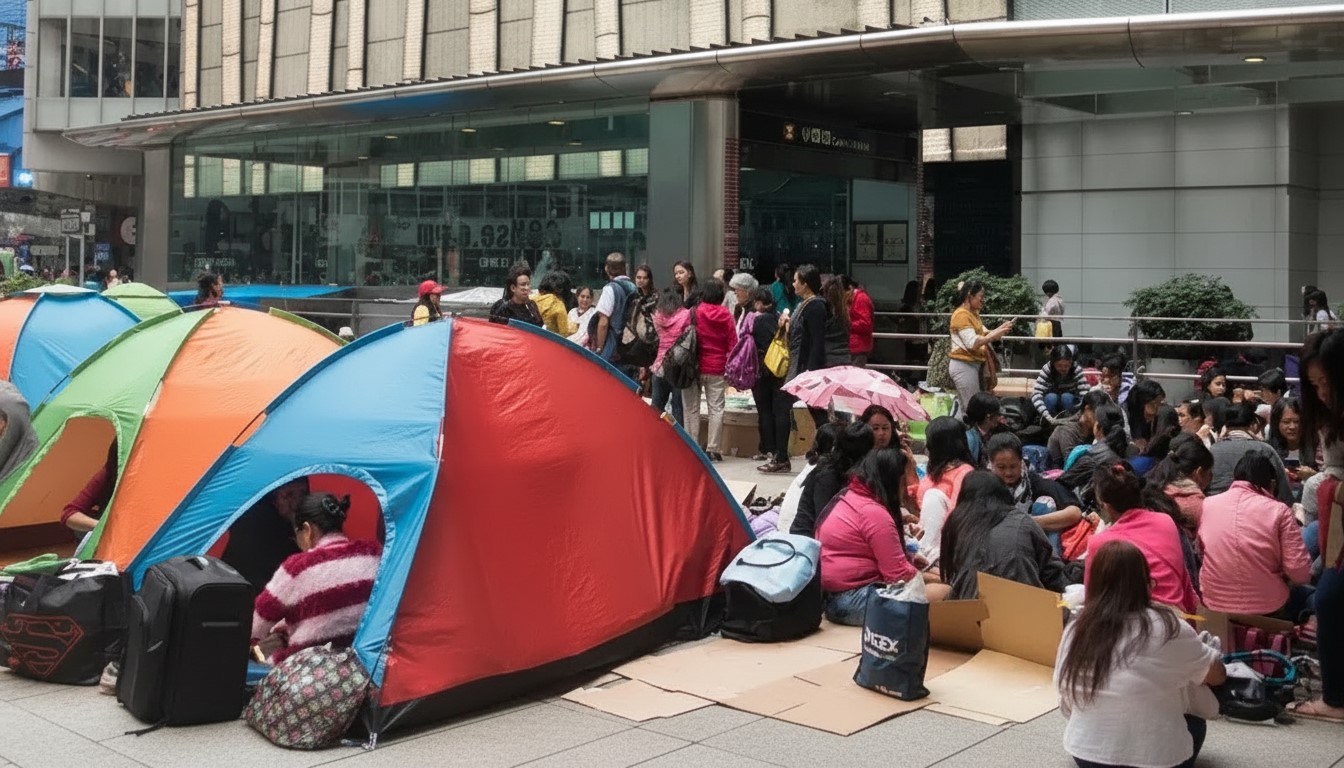
HONG KONG — A coalition representing Asian migrant workers is pushing back against complaints about domestic workers gathering in public spaces during rest days, saying the real issue is a chronic lack of adequate housing for the more than 340,000 migrant domestic workers employed across the city.
The Asian Migrants’ Coordinating Body (AMCB) issued a statement Wednesday criticizing what it called a misplaced public narrative around migrant domestic workers (MDWs) using tents, cardboard shelters, and gathering in bus terminals, parks, and other public areas — particularly during holidays.
“Instead of viewing MDWs hanging out in public areas as a ‘public problem,’ shouldn’t the sending and host governments be asked what kind of services they are providing to the more than 340,000 MDWs who play such a vital role in taking care of the majority of Hong Kong families?” said Shiela Tebia-Bonifacio, AMCB spokesperson.
The group cited findings from a recent internal study showing that 70% of surveyed domestic workers — 35 out of 50 — lacked a private room in their employer’s home, while only 30% had one. The results, the group said, help explain why workers seek refuge in public spaces even in uncomfortable conditions.
“It is not our fault that we are roaming around,” Tebia-Bonifacio said. “It is not surprising that, despite the hot weather and uncomfortable resting places, MDWs stay in these areas because most of them do not have proper accommodation at their employers’ houses.”
Mandatory Live-In Policy Under Fire
At the heart of the issue, advocates say, is Hong Kong’s mandatory live-in policy, which requires domestic workers to reside with their employers and prohibits “living out” arrangements. Critics argue the policy leaves workers with no alternative when their accommodations are inadequate or when their employment contracts are terminated.
AMCB said workers with nowhere to go on rest days or following contract terminations have increasingly been pushed out of traditional gathering spots. The group noted that domestic workers have gradually been banned from sitting in areas such as Chater Garden and the footbridges in Central — spaces that were once informal gathering points for the community on Sundays and public holidays.
Many workers, the group said, have resorted to makeshift cardboard shelters in public areas like Central and Victoria Park for privacy and protection from the elements.
Decades of Advocacy, Little Progress
AMCB said it has raised the accommodation issue with the Hong Kong government for nearly three decades without meaningful improvement. The group called on both Hong Kong authorities and the governments of sending countries — which include the Philippines and Indonesia — to provide dedicated rest facilities and address housing standards for domestic workers.
“It is unacceptable to blame MDWs for their lack of space,” the statement read. “This is discrimination and modern-day slavery that both sending and host governments must pay attention to.”
The group said it would continue to advocate for improved living conditions and formal recognition of domestic workers’ contributions to Hong Kong’s economy and family life.
Hong Kong’s government had not issued a public response to the AMCB statement at the time of publication.