





President Ferdinand Marcos Jr. confirmed Sunday that a Filipina caregiver became the first reported Filipino casualty in the escalating Middle East conflict, killed by shrapnel while helping her elderly ward reach a bomb shelter during an Iranian missile strike on Israel.
The victim was identified as Mary Anne Velazquez de Vera, a 32-year-old from Pangasinan province who had worked in Israel since 2019 as a live-in caregiver. Marcos, in a somber video message released Sunday night, said de Vera was struck before she and her patient — a 102-year-old man who also died — could reach safety. Her husband, also an overseas Filipino worker in Israel, identified her remains.
“I regret to inform you that we have received a report that there is already a Filipino casualty in the war currently taking place in the Middle East,” Marcos said. He pledged full government assistance to her family, stating in Filipino: “Lahat po ng tulong na kakailanganin ng kanilang pamilya ay ihahatid ng ating pamahalaan” — “All the help their family will need will be provided by our government.”
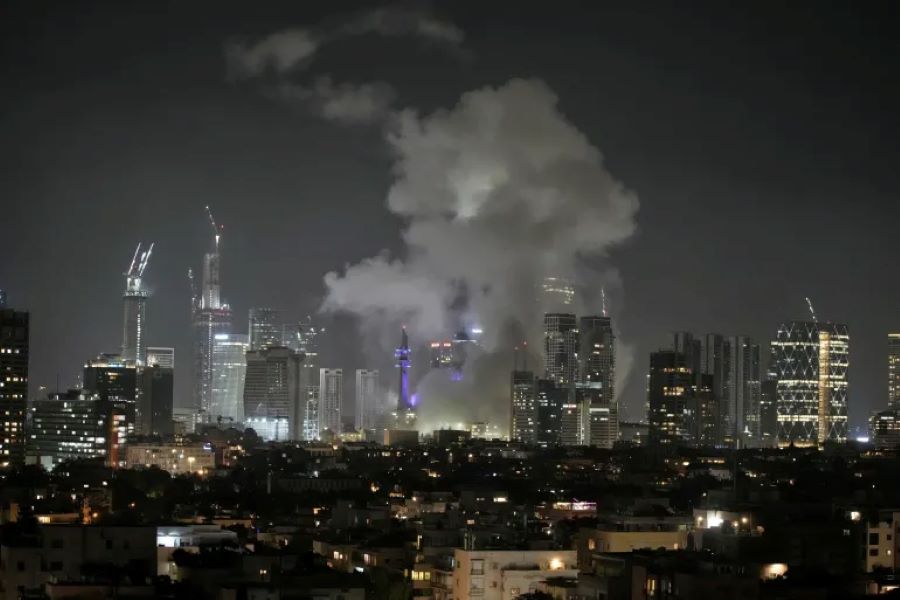
The Philippine Embassy in Israel described de Vera’s actions as selfless, noting she was assisting her patient to safety during the attack late Saturday in Tel Aviv. Israeli officials echoed the tribute, calling her an example of resilience among overseas Filipino workers.
The death occurred amid intense hostilities that began Saturday when the United States and Israel launched major strikes on Iran, targeting military and nuclear-related sites. U.S. President Donald Trump described the operation — dubbed by some reports as “Epic Fury” or similar — as aimed at degrading Tehran’s missile capabilities and neutralizing what Washington called a nuclear threat.
Iran retaliated with waves of drones and missiles toward Israel, and struck U.S. military facilities in Bahrain, Kuwait and Qatar. The exchanges have widened regional instability, with explosions reported across multiple countries and significant casualties on all sides, including the reported killing of Iran’s Supreme Leader Ayatollah Ali Khamenei in the initial strikes.
The Philippine government has placed embassies and labor offices across the Middle East on heightened alert. More than 2.4 million Filipinos live and work in the region — including roughly 31,000 in Israel, hundreds in Iran and large populations in Gulf states — many as domestic workers, nurses and other support staff.
Marcos said authorities continue to monitor the situation closely, with Filipinos advised to seek shelter and limit movements. The Department of Foreign Affairs and Department of Migrant Workers have activated contingency plans, including potential repatriation support, though no large-scale evacuation has been ordered. Hotlines remain open for those needing assistance.
Earlier Sunday, Marcos had reported no Filipino casualties as of morning hours, but the situation evolved rapidly with incoming confirmations from Israeli authorities and the Philippine Embassy.
The conflict has raised fears for the safety of overseas Filipino workers, a vital source of remittances for the Philippine economy, and prompted calls from migrant advocacy groups for accelerated protection and evacuation measures if tensions persist.