





The Philippine government has intensified its reintegration programs for displaced overseas workers as the number of citizens repatriated from volatile regions worldwide nears 4,000, officials said Monday.
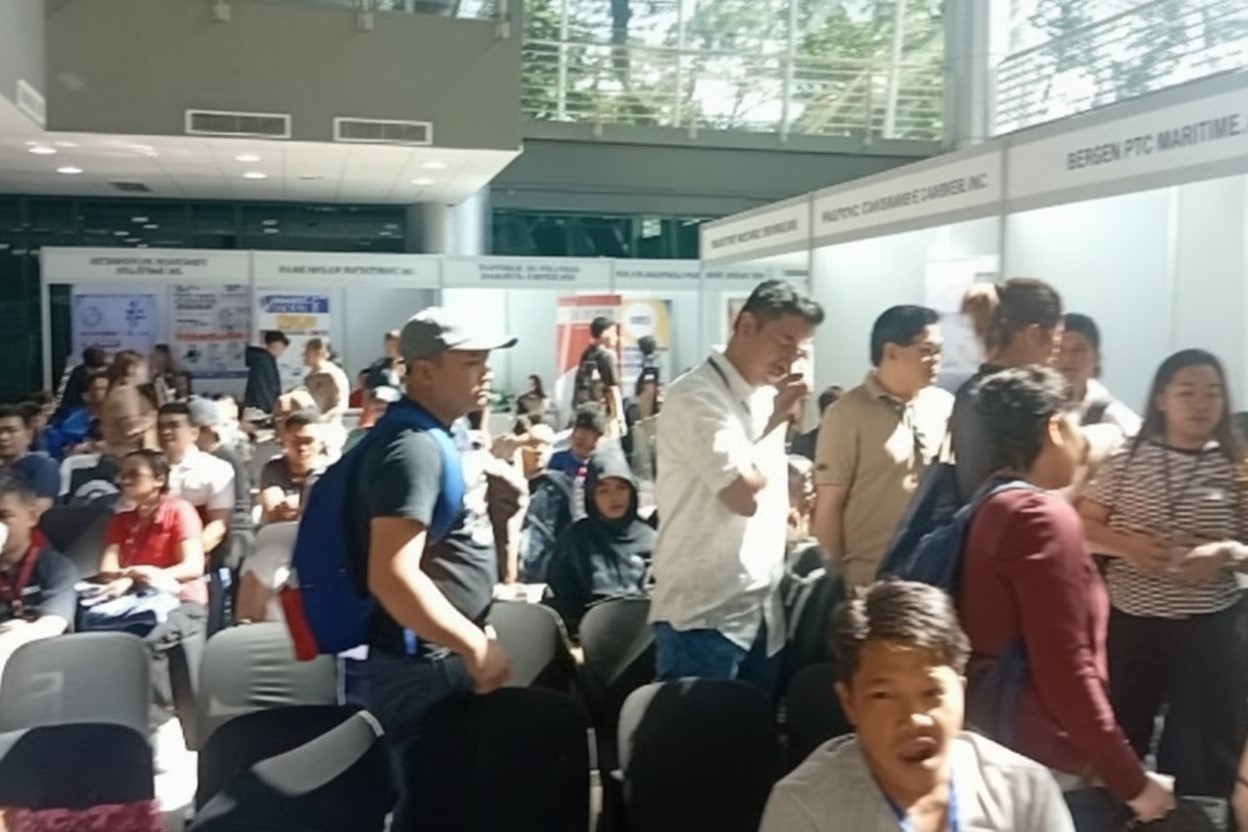
Speaking at the “Bayanihan Para sa Balikbayang Manggagawa” national fair, Department of Migrant Workers (DMW) Secretary Hans Leo Cacdac said the government is adopting a “whole-of-government” approach to ensure that returning Filipinos do not just arrive home safely, but find sustainable livelihoods.
“We are approaching the 4,000-mark in terms of our repatriations,” Cacdac told reporters. He added that when including those assisted via commercial flights and pre-repatriation programs, the total number of assisted workers reaches approximately 4,400.
Another 2,000 Filipinos are currently awaiting government-arranged chartered and commercial flights to return to the Philippines.
A One-Stop Shop for Recovery
The national fair served as a centralized hub for returnees, bringing together 22 government agencies—including the departments of trade, education, and health—alongside private sector partners to provide immediate employment and financial aid.
For many, the transition home is daunting. Overseas Workers Welfare Administration (OWWA) Chief Patricia Yvonne Caunan noted that a recent agency survey revealed a shift in the aspirations of returning workers:
- 55% of returnees expressed a desire to start their own businesses.
- 25.5% are seeking local employment.
- The remainder are looking to reskill or eventually seek opportunities in emerging markets in Europe and Asia.
“It is not our policy to encourage them to leave,” Caunan said, addressing the reality that many still view overseas work as more lucrative. “But the government’s efforts to open up opportunities here must not stop.”
Bridging the Gap
The government is targeting the specific needs of domestic workers, who make up 60% of the returnees. Through the Technical Education and Skills Development Authority (TESDA), the state is offering upskilling programs in fields such as caregiving to help workers transition into higher-paying local roles.
Financial “seed capital” is also a primary pillar of the reintegration strategy. Under the Balik-Pinas, Balik-Hanapbuhay program, qualified workers can receive up to 25,000 pesos ($445 USD) in startup capital, with additional low-interest loans available through partner banks for those looking to expand existing small businesses.
Beyond the Paycheck
Officials emphasized that the reintegration effort is not purely economic. Because many workers were forced to flee conflict or abusive environments, the fair provided:
- Psychosocial services and counseling.
- Medical assistance and social welfare support.
- Legal aid for those with pending claims against foreign employers.
Despite the push for local stability, the DMW confirmed that 200,000 job orders remain available for those who still choose to work abroad, though the government is increasingly vetting these opportunities for safety and higher standards of labor.
“As long as our fellow Filipinos need assistance, we will continue to help,” Cacdac said. “Not only in bringing them home, but in helping them move forward.”