






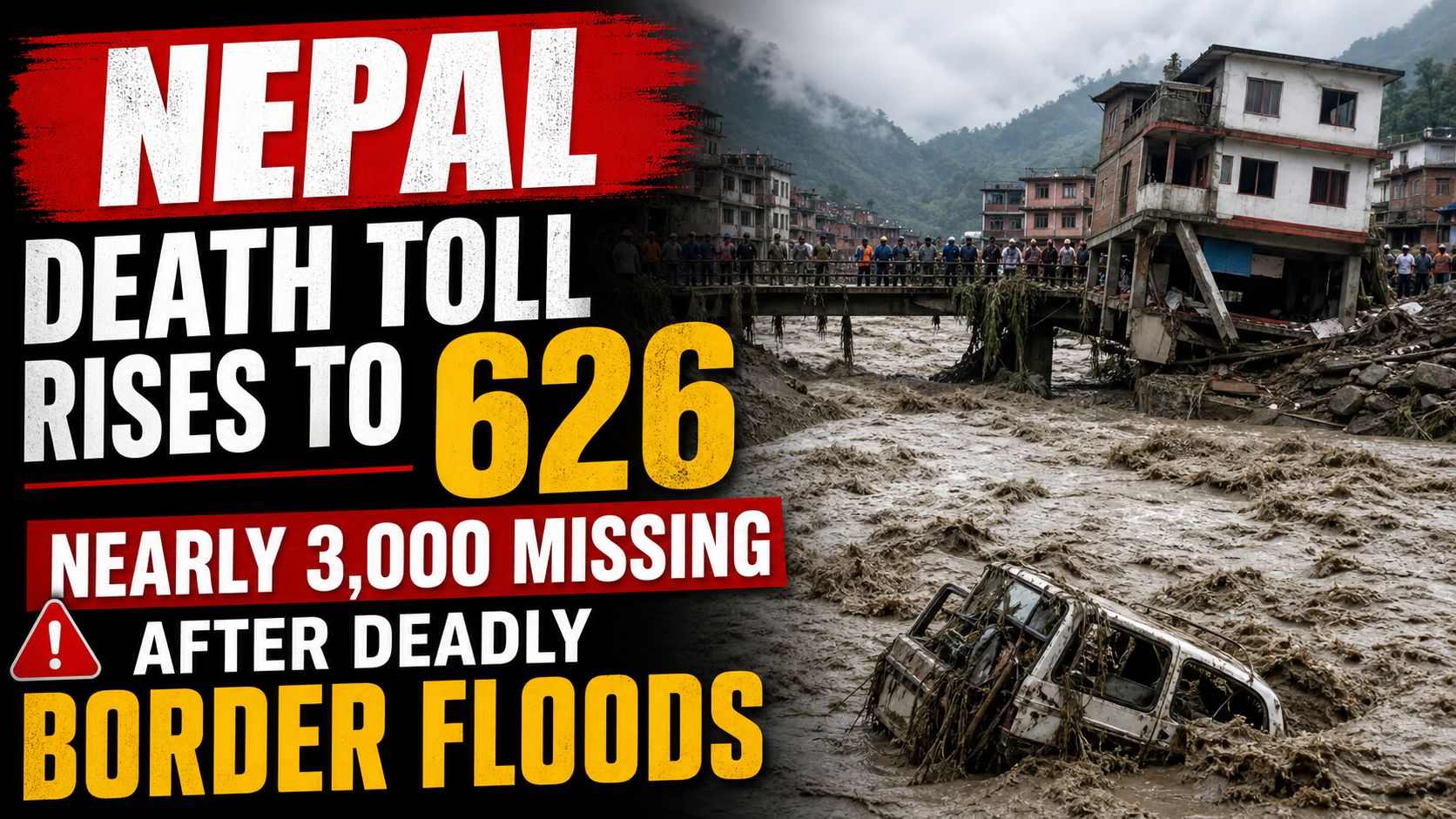
KATHMANDU, Nepal — Rescuers in Nepal and China continued searching Saturday for thousands of people missing after deadly mudslides and flooding devastated the Himalayan border region, killing at least 633 people.
Nepal’s National Disaster Risk Reduction and Management Authority said the death toll had reached 626 as of 10 a.m. Saturday. It said 2,426 people remained missing.
Across the border in China, seven people were confirmed dead and 554 were missing, state-run Xinhua News Agency reported. Two villagers had been rescued, it said.
The disaster struck Wednesday, unleashing torrents of ice, mud and debris that swept away riverside settlements, roads and buildings. The Red Cross said as many as 93,000 people may have been affected and warned that the death toll could rise.
In Kathmandu, Matti Maya Tamang was reunited Friday with her 8-year-old son, Zoyal Ghale, after fearing he and his brother had died when their school was destroyed.
Ghale survived by running into a forest and climbing trees as floodwaters swept through the area. He was later found with a broken leg and facial cuts and airlifted to a hospital. Journalists found him holding two 10-rupee notes that police had given him to encourage him to seek medical treatment.
“I felt my life was back,” Tamang said. She later found her younger son alive.
“All the settlements near the river were swept away. There is nothing left,” survivor Buddhi Ram Dangol said.
Surveillance footage from China’s Gyirong border crossing complex showed floodwaters and debris engulfing buildings as people attempted to flee.
Rescuers did not reach the site until Friday after roads were destroyed in the steep Himalayan terrain. Chinese media reported that a team of 21 rescuers and a search dog crossed mountains and valleys, using ropes to move through forests and along cliffs.
“There was no road,” rescue worker Zou Mingqi said. “It was all virgin forest and sheer cliffs.”
At the border complex, “as far as the eye could see, there was nothing but ruins,” he said.
The search has been complicated by the formation of barrier lakes caused by the debris. Water and debris from one lake began overflowing into the Lhende Khola and Trishuli rivers, prompting Nepal to suspend rescue operations for about three hours. China Central Television reported that Chinese rescue workers and vehicles also withdrew temporarily.
Operations resumed after the immediate threat eased, but authorities continued to warn of further flooding. Food and water supplies were running low in communities affected by the disaster.
On the Nepalese side, the military located people trapped in a tunnel at the Trishuli 3A hydropower project. About 350 workers and residents were brought to safety, army spokesman Raja Ram Basnet said, but more than 100 people remained trapped in the area.
Nepal was also monitoring two barrier lakes upstream from the flood zone, warning that flood risks would persist until both lakes drained. Satellite imagery showed one lake was growing larger and had no visible outlet, raising concerns that water pressure could continue building.
Xinhua reported that the first barrier lake was shrinking, citing China’s Ministry of Water Resources. But a government geohazards expert warned that the lake could remain unstable and that more than 100 glacial lakes in the region could pose additional risks.
The United Nations and its partners were increasing relief supplies, U.N. spokesperson Stephane Dujarric said. About 20,000 households were expected to need food assistance, while more than 50,000 people needed emergency water and other support.
A South Korean rapid response team in Kathmandu had not been deployed because Nepal had not yet established a plan to receive foreign rescue teams, South Korea’s Foreign Ministry said.
The Kathmandu Post reported that China, India, the United States, Britain, Japan, South Korea, Sri Lanka and Bangladesh had asked Nepal’s government to allow their search-and-rescue teams to assist.