
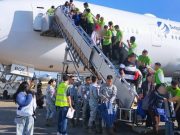

The Philippine government on Saturday brought home 442 Filipinos from the United Arab Emirates aboard a chartered flight, the first such government-organized repatriation since escalating conflict in the Middle East disrupted air travel and heightened risks for overseas workers.
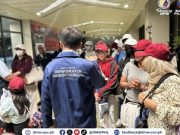
The Boeing 747-400 flight from Fujairah landed past noon at Ninoy Aquino International Airport’s Terminal 3 in Pasay City, according to the Department of Migrant Workers.
Of those repatriated, 200 were overseas Filipino workers, 60 were their next of kin and 182 were stranded by flight cancellations stemming from the ongoing regional tensions, the department said. DMW Secretary Hans Leo J. Cacdac, who accompanied the group, described it as the inaugural Philippine-chartered flight for affected nationals since the conflict erupted. He said the operation has now brought nearly 1,000 Filipinos home.
“We are now geared toward making sure that those who have been repatriated will be properly channeled to employment, livelihood and retraining opportunities,” Cacdac said.
The secretary praised the UAE for what he called its “high-level of protection” extended to both citizens and foreigners, which he observed firsthand during the operation.
Among those returning were Filipino couple Rommel and Roda Maninang, who had been stranded since March 1 due to the disruptions. They expressed gratitude for the government’s swift response.
“When we arrived, there was immediate help. We were asked if we are okay, including our health, although we were really stressed with what happened to us. It’s no joke,” Rommel Maninang said. “We really felt the compassion of our agencies.”
The Departments of Health and Social Welfare and Development said they would provide post-arrival services, including psychosocial support and medical assistance, particularly for those in need.
The repatriation comes amid Iranian retaliatory strikes across the region following a U.S.-Israeli military operation launched on Feb. 28 that targeted Iranian nuclear sites and killed Supreme Leader Ali Khamenei. The UAE’s air defenses have continued to intercept incoming missiles and drones, according to Emirati authorities.
State-run Emirates News Agency reported that the UAE has intercepted a total of 268 ballistic missiles, 15 cruise missiles and 1,514 drones since the Iranian attacks began. The strikes have killed six people — Emirati, Pakistani, Nepali and Bangladeshi nationals — and caused 131 minor to moderate injuries among various nationalities, including one Filipino.
Cacdac’s department has coordinated the effort under instructions from President Ferdinand Marcos Jr., part of a broader push to assist Filipinos affected by the instability.
The Philippine government has said additional chartered flights are planned to bring home more nationals from other parts of the Middle East as commercial flights remain hampered.