







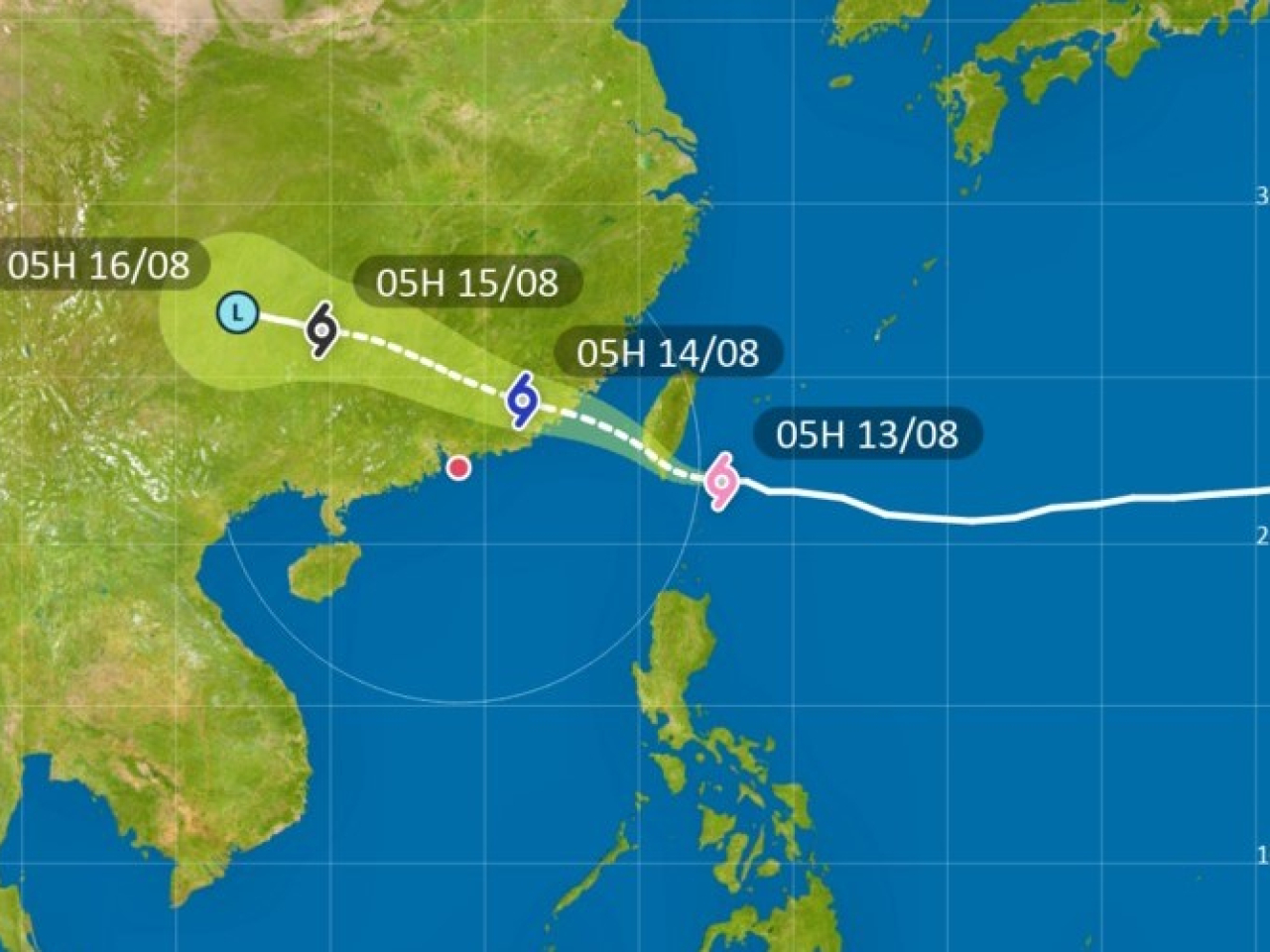
The Hong Kong Observatory hoisted the Standby Signal No. 1 at 8:40 a.m. Wednesday as Severe Typhoon Podul barreled toward the region, coming within 800 kilometers of the city. Forecasters warned that the fast-moving storm could prompt stronger alerts by Thursday morning, with scorching temperatures adding to the challenges.
The No. 1 Signal, the lowest in Hong Kong’s typhoon warning system, indicates a tropical cyclone is centered within about 800 kilometers and may affect the territory. Authorities said the signal would remain in force throughout the day as they monitor Podul’s trajectory and intensity.
“Depending on the distance between Podul and the Pearl River Estuary, its intensity, and changes in local winds, the Observatory will assess the need to issue the Strong Wind Signal, No. 3, from tonight to tomorrow morning,” a spokesperson for the Observatory said in a statement.
Podul, moving swiftly across the South China Sea, is expected to make landfall late Wednesday or early Thursday near southern Fujian or eastern Guangdong, according to the Observatory’s latest forecast. The storm is projected to pass closest to Hong Kong on Thursday morning, potentially bringing gusty winds and heavy rain to the region.
Adding to the concern, the Observatory noted that the subsiding air associated with Podul could push temperatures to 35 degrees Celsius (95 degrees Fahrenheit) or higher, intensifying the city’s already sweltering conditions. Residents were urged to stay hydrated and take precautions against the extreme heat.
Hong Kong’s typhoon signals guide residents and businesses on necessary precautions, with higher signals like No. 3 indicating stronger winds that could disrupt transportation and daily activities. The city’s dense urban landscape and reliance on public transit make timely warnings critical.