








The Philippine government repatriated 190 overseas workers on Thursday after they were rescued from fraudulent “scam hubs” in Cambodia, marking the latest recovery in a regional crackdown on human trafficking and cybercrime syndicates.
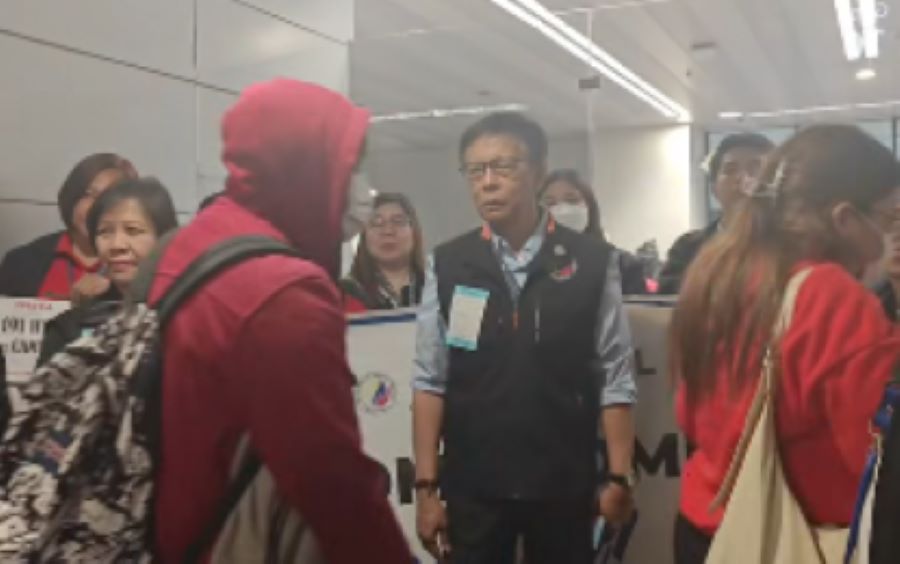
The group arrived at Ninoy Aquino International Airport in Manila aboard a chartered flight, greeted by officials from the Department of Migrant Workers (DMW) and other government agencies. The repatriation is part of a broader effort to assist Filipinos lured abroad by the promise of high-paying jobs, only to be held captive and forced to perform online financial scams.
Migrant Workers Secretary Hans Leo Cacdac said the operation followed a “whole-of-government approach” to provide protection and reintegration for the victims.
“As per the instruction of the President to provide full protection to our workers, we have joined forces to provide assistance to those coming from scam hub operations and crackdowns in Cambodia,” Cacdac told reporters during a press briefing at the terminal.
Officials noted that 191 workers were originally scheduled for the flight, but one individual remained in Phnom Penh to receive urgent medical treatment. Philippine Ambassador Flerida Ann Camille Mayo and a specialized team remain on the ground to monitor her condition.
The arrival brings the total number of Filipino scam victims repatriated from across Southeast Asia to 877 since 2022.
Upon arrival, the returnees were provided with temporary shelter, financial aid, and transportation to their home provinces. Because of the nature of their ordeal, health officials said medical and psychological evaluations are a priority.
“We want to make sure they are not just physically healthy, but also mentally fit, given the trauma they have experienced,” said Department of Health Assistant Secretary Gloria Balboa.
The recruitment process for these hubs typically begins on social media or through informal channels, according to Justice Undersecretary Nicholas Felix Ty. Victims are often promised legitimate office work but are taken directly to fortified compounds upon arrival in the country.
Cacdac issued a stern warning to Filipinos seeking employment abroad, urging them to use only official government channels. He highlighted several “red flags,” including recruiters who operate solely online or insist on meeting in public places like restaurants rather than licensed offices.
He also cautioned against the misuse of visa-free travel within the Association of Southeast Asian Nations (ASEAN).
“The visa-free arrangement for ASEAN countries is only for tourism,” Cacdac said. “If you want to work in Cambodia, Laos, Myanmar, or Thailand, you must have a valid work visa in hand before leaving the Philippines.”