





MANILA — The Philippines and Canada have signed their first-ever federal bilateral labor and migration agreement, committing both governments to stronger protections for Filipino workers abroad through fair recruitment practices and enhanced government-to-government cooperation, Philippine officials announced Friday.
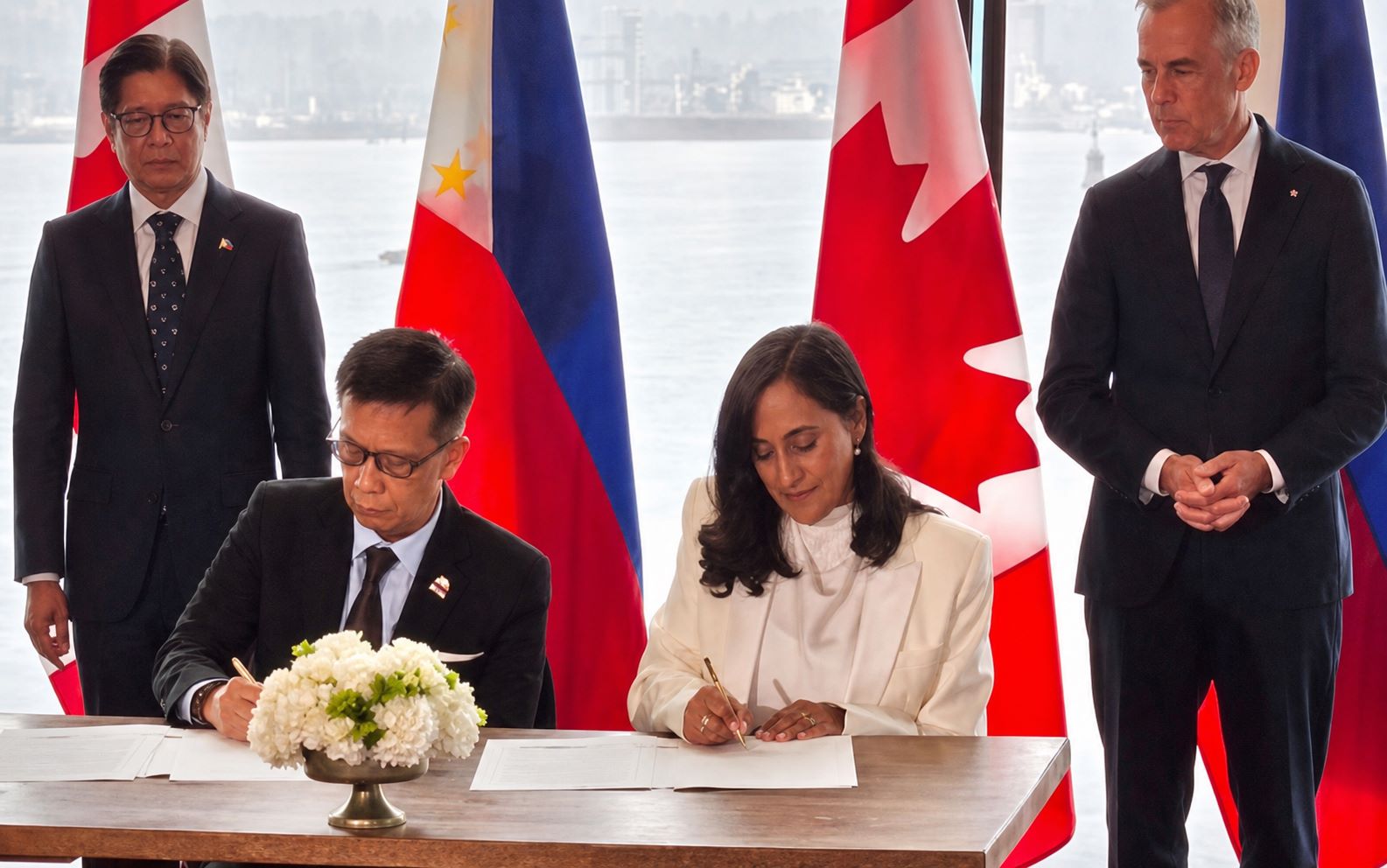
The Joint Declaration of Intent on Labor and Migration Cooperation was signed Thursday in Vancouver between Philippine Migrant Workers Secretary Hans Leo Cacdac and Canadian Foreign Minister Anita Indira Anand, with Philippine President Ferdinand R. Marcos Jr. and Canadian Prime Minister Mark Carney looking on during Marcos’ working visit to Canada.
“This is the first-ever federal bilateral agreement on labor and migration with Canada,” Cacdac said in a statement. “We continue to expand and elevate our labor cooperation by affirming our shared values on fair and ethical recruitment,” he added, citing a directive from President Marcos.
Carney similarly described the declaration as “the first of its kind” signed at the bilateral federal level by Canada.
The agreement, reached between the Philippine Department of Migrant Workers and Canada’s Department of Citizenship and Immigration, establishes a shared framework to guide cross-border labor migration between the two countries. While the Philippines had previously maintained labor cooperation arrangements with several Canadian provinces, officials said Thursday’s signing marks the first time such a framework has been formalized with Canada’s federal government.
Among its key provisions, the declaration calls for employers — not workers — to bear the costs of recruitment, prohibiting the charging of recruitment fees to job seekers. The pact also pledges to ensure migrant workers are informed of their rights and have access to grievance mechanisms should disputes arise.
Cacdac described the agreement as more than a diplomatic milestone, calling it “a concrete step toward making overseas employment safer, fairer, and more accessible for Filipino workers and their families.”
The Philippines is one of the world’s largest exporters of labor, with millions of overseas Filipino workers employed across Asia, the Middle East, Europe, and North America. Canada has emerged as an increasingly significant destination, drawing Filipino migrants across multiple provincial programs in sectors ranging from healthcare to skilled trades.