








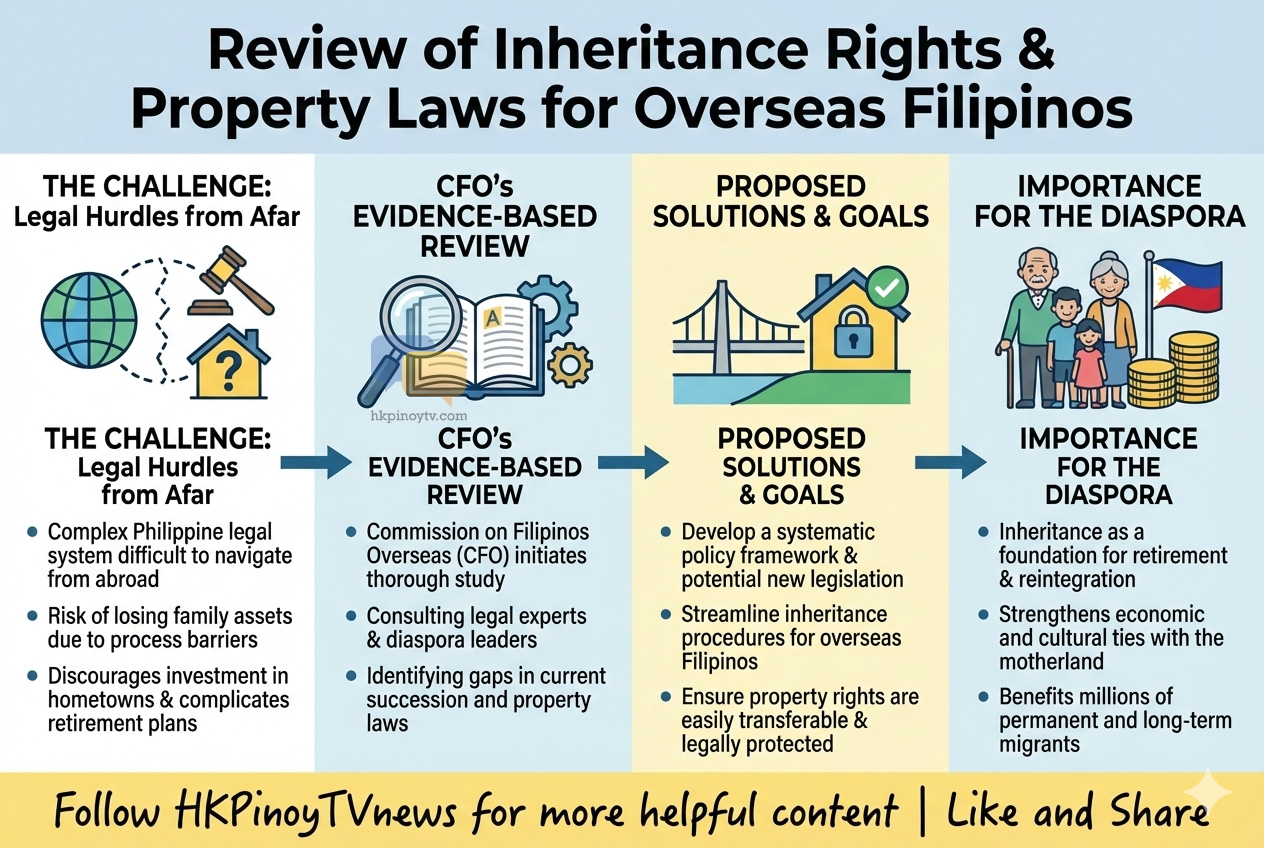
The Commission on Filipinos Overseas is calling for an evidence-based review of the country’s succession and property laws to better protect the inheritance rights of Filipinos living abroad, the agency announced this week.
CFO Secretary Dante “Klink” Ang II said the initiative aims to address growing legal challenges faced by migrant Filipinos in maintaining and securing family assets in the Philippines from overseas.
“Our responsibility is to conduct a thorough, research-driven study on these property concerns,” Ang said in a statement. “We need an evidence-based approach to identify where our current laws fall short and what policy interventions are required to safeguard the interests of our kababayans.”
The proposal follows input from diaspora members, including Filipino-American lawyer Sylvester Lee Salcedo, a retired U.S. Navy officer, who pointed to complications in asserting property claims remotely.
Many overseas Filipinos encounter difficulties navigating the Philippine legal system from abroad, which can result in the loss of family properties and discourage continued economic and emotional connections to the homeland, according to the CFO.
The agency highlighted that property and inheritance security is especially important for long-term and permanent migrants, including those planning to retire in the Philippines. Protecting assets across generations would help overcome what the CFO described as an “inheritance hurdle” and support smoother reintegration.
The review aligns with the CFO’s broader mission to strengthen political, cultural and economic ties between the Philippines and its overseas communities. The agency, which operates under the Office of the President, focuses primarily on permanent and long-term migrants — distinct from temporary overseas Filipino workers handled by the Department of Migrant Workers.
An estimated 10.7 million Filipinos live abroad, with more than half falling under the CFO’s constituency, including dual citizens, spouses of foreign nationals, and others.
The CFO’s Policy, Planning, and Research Division will lead a consultative process involving legal experts and diaspora leaders to develop recommendations for potential legislative or executive action. No specific timeline for the study or any proposed reforms was provided.
The push also ties into the agency’s work in the Technical Working Group on Retirement and Reintegration, where secure inheritance is seen as encouraging investments in hometowns and reinforcing the diaspora’s role as an economic pillar.
Current Philippine laws restrict land ownership for non-citizens, though former natural-born Filipinos can reacquire full rights under dual citizenship provisions or own limited amounts under specific statutes. The CFO’s review focuses on succession mechanisms that affect how properties transfer to heirs abroad. (Rodolfo Canete Jr.)