


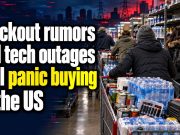

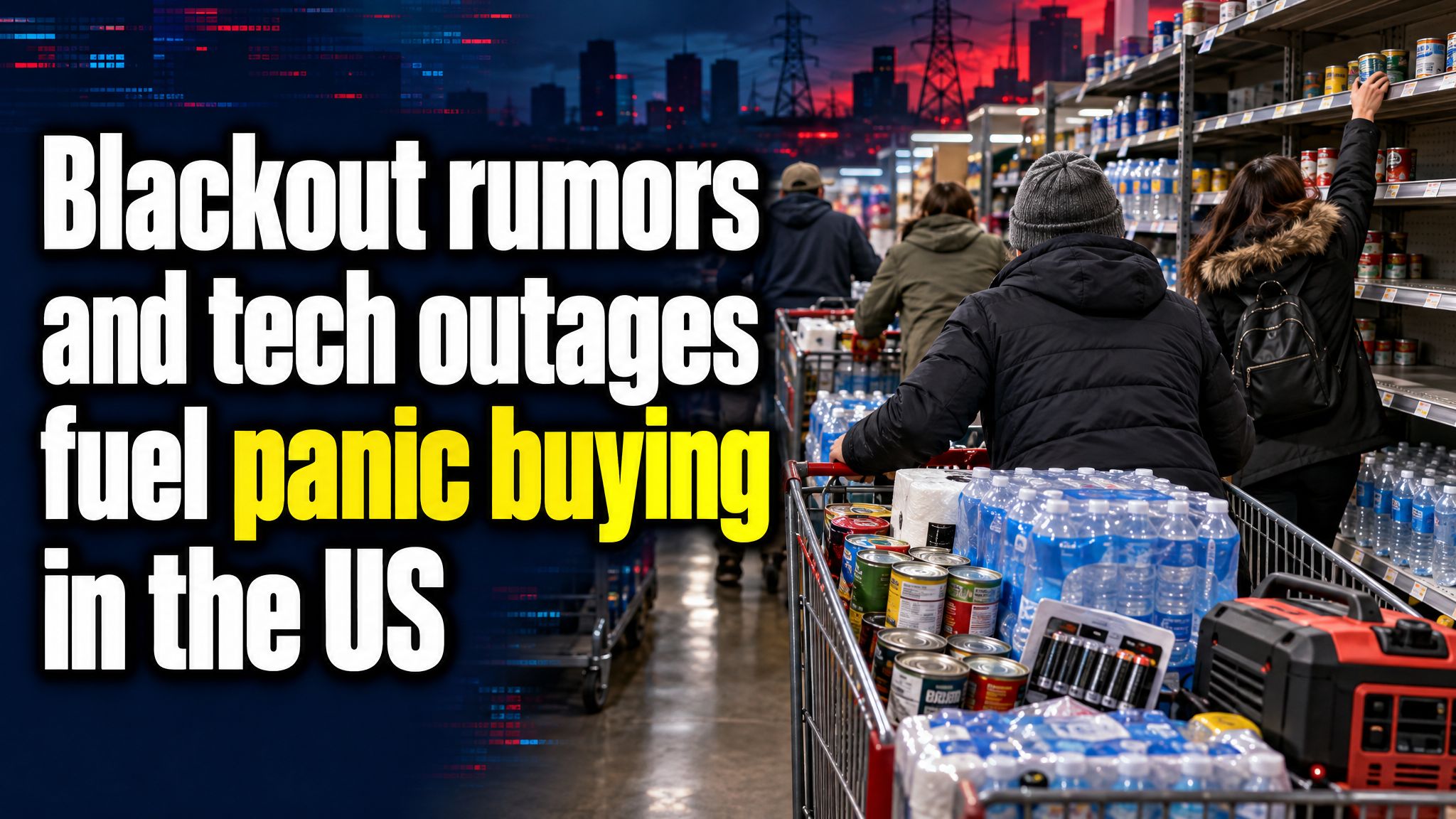
Some Americans are stocking up on bottled water, canned food, batteries and generators as a string of technology outages fuels anxiety about essential services and amplifies unsubstantiated social media warnings of a nationwide blackout.
Retailers and emergency-supply businesses have reported increased buying, even as officials say there is no evidence connecting the recent disruptions to Microsoft applications, airline operations and banking services.
At Costco, 21 of 26 high-priced generator models offered online were sold out as of Sunday night, Mizuho Securities analyst David Bellinger wrote in a research report, according to CBS News.
“Consumer anxiety following the Microsoft Outlook outage, the ground stoppage for all U.S. airline flights, and apocalyptic concerns flaring up across social media have all contributed to increased emergency prep sales at Costco,” Bellinger wrote.
The buying began before the latest disruptions. Costco Chief Financial Officer Gary Millerchip said demand for rice, canned goods, water, paper products, generators and batteries increased toward the end of October, seemingly in response to concerns circulating on social media, according to remarks reported by Bloomberg and cited by Fortune.
Smaller retailers also have reported a surge.
Byron Walker, founder and CEO of Survival Frog, told Axios that sales rose 450% between Oct. 27 and Nov. 16 compared with preceding weeks. Most recent buyers were new customers, he said. Food, including canned meats, led demand, followed by radios, solar generators, battery packs and water filters.
“It does seem much more mainstream now,” Walker said of emergency preparedness.
The closely timed outages have disrupted work, travel and access to financial services, prompting online speculation about a coordinated cyberattack. But the affected companies have attributed the failures to technical issues, including maintenance and upgrades. The Federal Aviation Administration blamed its nationwide ground stop on a contractor updating its flight system, CBS News reported.
Secretary of State Marco Rubio said Wednesday there was “zero evidence” linking the incidents.
“The Microsoft incident has nothing to do with what we saw with the FAA. The FAA has nothing to do with what we saw with the banks a few days ago,” Rubio said during a news conference in the Philippines.
Reports of a Pentagon initiative to help military bases operate independently for at least 90 days if civilian systems fail also have fueled online rumors of a three-month blackout, according to Axios. A military preparedness measure, however, is not evidence that such a blackout is imminent.
The unease extends beyond store shelves.
Shakeela McNeely, 36, of Concord, North Carolina, told MarketWatch that she reviewed her emergency supplies after the flight disruptions and Microsoft outage. When she later heard about banking problems, she went to withdraw cash — only to find the ATM was down. She eventually obtained money through her credit union, according to the report, published by Morningstar.
Alexander Smith, a behavioral economics professor at Worcester Polytechnic Institute, told MarketWatch that uncertainty about what might happen next can push people toward greater preparation.
“Right now we have something more than that. We have ambiguity, because people aren’t even sure what could happen,” he said.
Vice President JD Vance has sought to reassure Americans concerned that the outages foreshadow a broader emergency.
“We do not see some crisis coming down,” he told Fox News, according to Axios.