






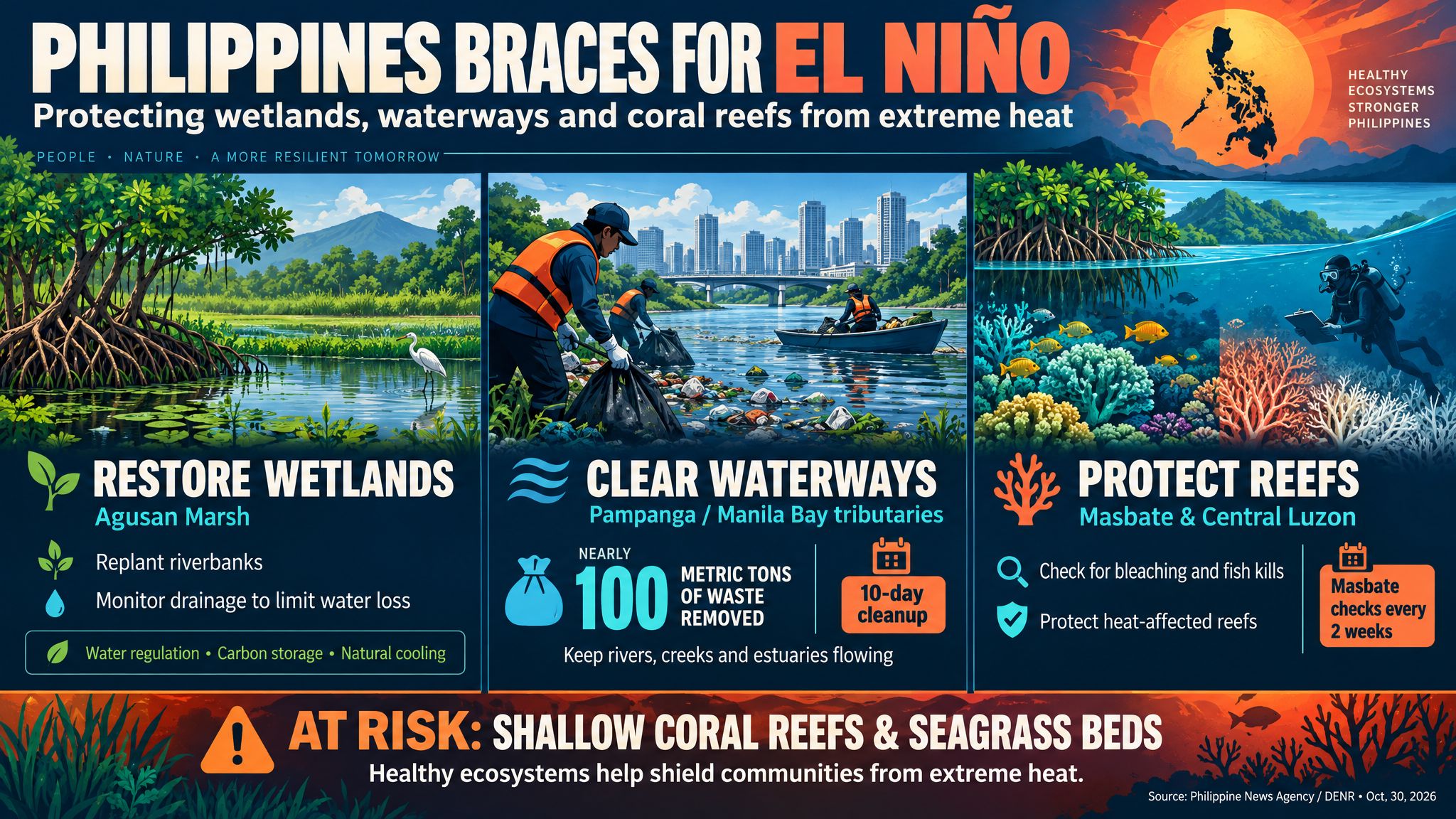
MANILA, Philippines — The Philippines is restoring wetlands, clearing waterways and protecting coral reefs as it braces for a potentially very strong El Niño that could intensify dry conditions and expose vulnerable ecosystems to extreme heat, the Department of Environment and Natural Resources said.
Environment Secretary Juan Miguel Cuna said in a statement Thursday that the nationwide efforts aim to preserve natural defenses against extreme heat and protect communities that depend on them.
“We are ensuring that our ecosystems remain functional buffers against extreme heat,” Cuna said.
The work includes safeguarding peatlands in the Agusan Marsh, removing nearly 100 metric tons of waste from tributaries feeding Manila Bay and monitoring heat-stressed coral reefs in Masbate and Aurora, the department said.
At the Agusan Marsh Wildlife Sanctuary in the southern Philippines, workers are replanting riverbanks with trees suited to wetland conditions and monitoring drainage canals to prevent excessive water loss. The sanctuary’s peatlands and freshwater wetlands help regulate water flow, store carbon and cool surrounding areas.
In Pampanga province, a 10-day cleanup removed nearly 100 metric tons of solid waste from waterways, the department said. The operation, conducted with a Department of Labor and Employment assistance program for disadvantaged and displaced workers, aimed to keep garbage from blocking rivers, creeks and estuaries connected to Manila Bay.
In Masbate province, environmental personnel are checking vulnerable coastal areas in Mobo and San Jacinto every two weeks for coral bleaching and fish kills. Findings are shared with fisheries officials, municipal agriculture offices and disaster response offices to coordinate action.
Workers have also cleared blocked waterways to maintain seawater circulation through mangrove forests. Boat anchoring and marine resource extraction have been prohibited in heat-affected reef areas to support recovery, the department said.
In Central Luzon, the agency is monitoring marine heat stress in Aurora, Bataan and Zambales to assess its effects on ecosystems and fisheries. It is also coordinating with other government agencies and local authorities to monitor water sources, rivers and creeks in Bulacan, Pampanga, Nueva Ecija, Bataan and Tarlac.
The department said it is informing fishing communities and local groups about the harmful effects of extreme temperatures on marine life, particularly in shallow coral reefs and seagrass beds.