




El Niño means “The Little Boy” in Spanish — but there’s nothing little about the damage it’s doing to Filipino food, farmers, and your dinner table.
A Weird Name for a Very Big Problem
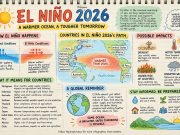
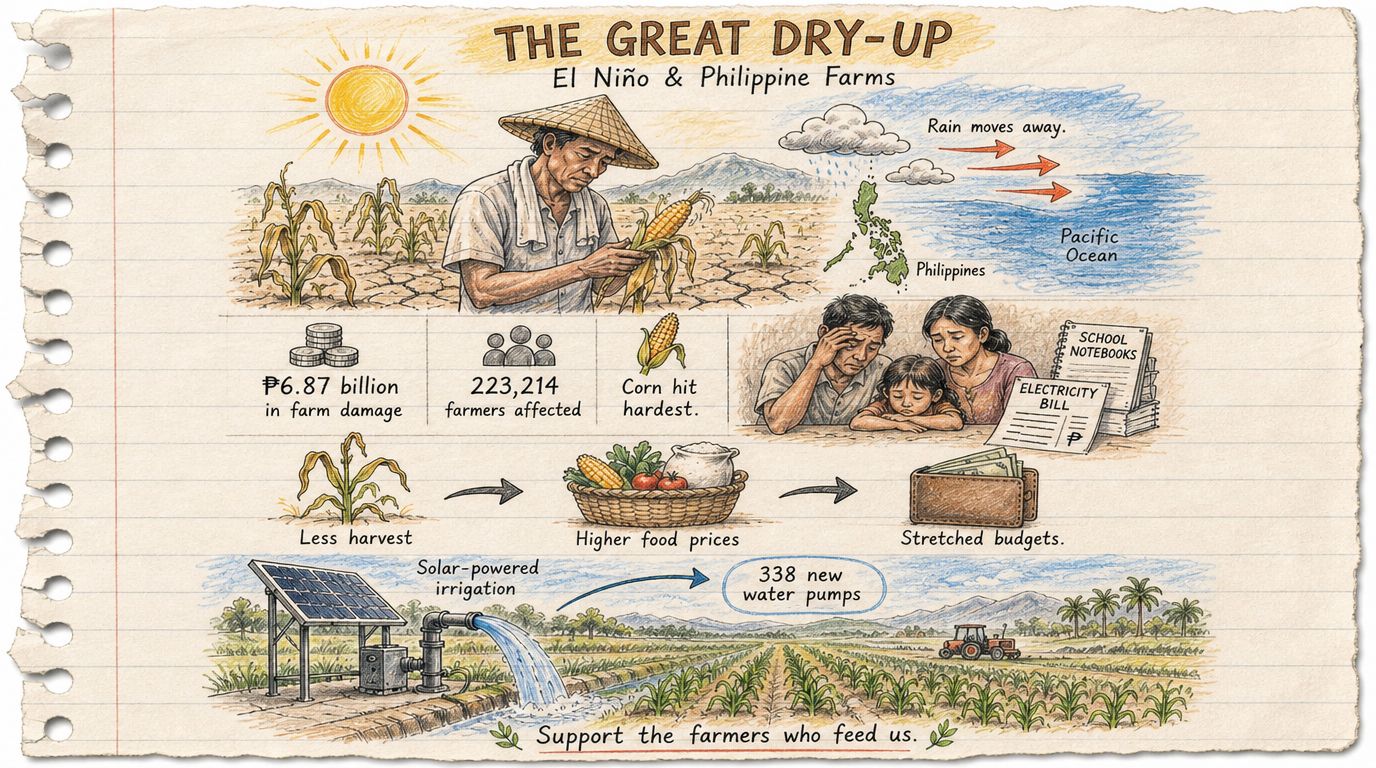
Imagine you’re at a birthday party, and suddenly the sprinkler system that waters the garden starts spraying the neighbors’ yards instead of yours. That’s kind of what El Niño does to the Philippines. It’s a giant weather pattern that picks up the Pacific Ocean’s warm water — and the rain clouds that travel with it — and moves them east, toward South America.
When the rain leaves, the Philippines dries out. And farms that need water start to suffer.
The Numbers Tell the Story
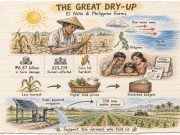
This year, the Department of Agriculture added up the damage, and the total is enormous: ₱6.87 billion — that’s like losing 6,870 brand-new cars worth of food!
Here’s what was hurt:
- Corn took the biggest hit: almost ₱4.9 billion in losses across 170,605 hectares (imagine an area the size of more than 300,000 football fields, just for corn!)
- Rice lost ₱1.53 billion — that’s the rice in your breakfast, lunch, and dinner
- Vegetables, chickens, and pigs suffered too — the foods that fill your lunchbox
All in all, 223,214 farmers across 14 regions of the Philippines watched their hard work dry up in the sun.
A Real Farm Family’s Story
Meet Joselito, a corn farmer in Sultan Kudarat. His province is like a bullseye for El Niño — it has been struck by seven out of the last eight El Niño events. That’s like losing your homework to the family dog seven times!
This year, Joselito’s corn plants started turning yellow and curling at the leaf tips — the plant’s way of saying “I’m thirsty.” Without rain, the corn kernels on the cob never filled out. What should have been a tall, heavy ear of corn came out small and empty.
His family had planned to use money from selling the corn to buy school supplies and pay for electricity. Now those plans are in trouble.
Why Corn Goes First
Here’s a fun science fact: corn is like the fussy kid in class when it comes to water. It needs just the right amount, exactly when the plant is making its kernels (the part we eat). Rainfall deficits during that critical stage hit yields the hardest, which explains why this year’s losses of 126,883 metric tons mostly struck when corn was growing up and making its ears.
Rice is a bit tougher — because many rice paddies sit near dams and canals that store water. But here’s the bad news: agricultural officials warn that fields fed by underperforming irrigation systems are still at risk, and the driest months in 2027 haven’t even arrived yet.
The Chain Reaction — From Farm to Your Table
When farms lose crops, things happen one after another, like dominoes:
- Less food is harvested →
- Prices rise at the market →
- Mom and Dad pay more for the same groceries →
- Families on tight budgets struggle with stretched wallets — just like the last time a strong El Niño hit
Economists call this “food-led stagflation” — a fancy way of saying the price of everything goes up because the price of food went up first. Economists are already warning of that risk — one even called it “the torpedo that can sink the ship” of household budgets.
The Government Fights Back — With Tractors and Sunshine!
Here’s the cool part: the heroes of this story don’t wear capes. They drive tractors and install solar panels.
The Department of Agriculture has launched a rescue plan that includes:
- ₱6.2 billion in emergency fuel and fertilizer support
- ₱1 billion each set aside for foods that can survive drought — like corn, sorghum (a tough grain related to corn), white corn, and soybeans
- Cloud seeding — yes, that’s real! — over the Magat Dam watershed, where planes release special chemicals into clouds to encourage them to make rain
- 338 new water pumps bringing underground water to dry fields
- Solar-powered irrigation — pumps powered by sunshine that don’t break down just because the power grid does!
That’s right — the government is using the Sun to fight the Sun. Now THAT is counterattack!
What Kids Can Learn From This
Farming in the Philippines is like being a superhero. You need to be strong, patient, and clever all at once. When El Niño comes along, farmers don’t get to quit — they’re still responsible for feeding an entire country.
So the next time you’re having rice and chicken adobo for dinner, remember: somewhere, a farmer like Joselito made that food happen — and right now, they need all the help they can get.
Fast Facts
- ₱6.87 billion in farm damage has already been recorded across 14 regions
- Corn suffered the worst losses, at ₱4.9 billion
- 223,214 farmers have been hurt by the drought already
- The government countered with a ₱10.96 billion emergency response package