







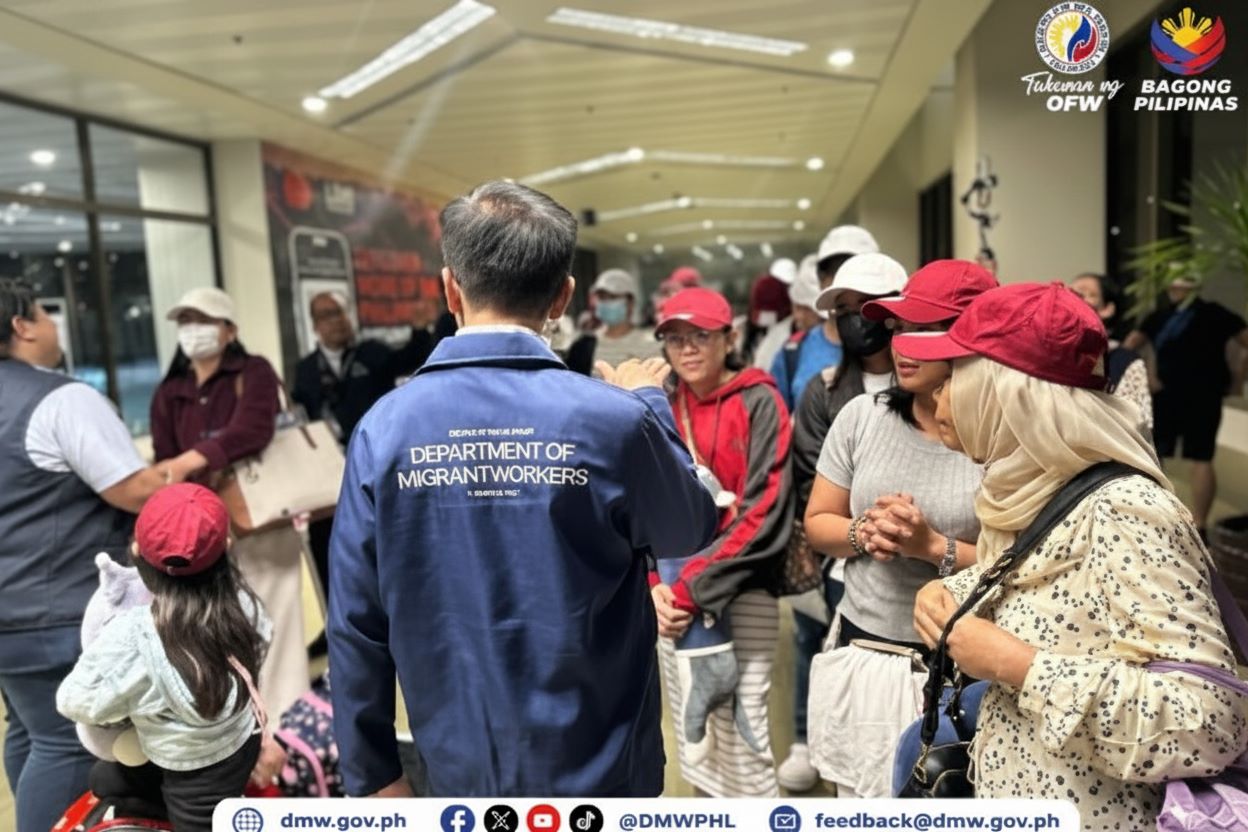
MANILA, Philippines — The Philippine government intensified its emergency repatriation operations Tuesday, welcoming six flights of citizens fleeing the escalating crisis in the Middle East as officials move to evacuate thousands of workers from the conflict-affected region.
The arrivals are part of a massive logistical undertaking by the Department of Migrant Workers (DMW) and the Overseas Workers Welfare Administration (OWWA) to bring home nearly 2,000 overseas Filipino workers (OFWs) by early next week.
OWWA Chief Patricia Yvonne Caunan told reporters in Mandaluyong City that Tuesday’s commercial flights carried 75 government-assisted citizens. The group included the first batch of repatriates from Kuwait and workers who had been moved overland from Bahrain into Saudi Arabia to catch flights.
“We are expecting arrivals from our fellow countrymen whom we helped cross from Bahrain to Saudi Arabia,” Caunan said. “These include complete services, from documentation and exit clearances to flights and reintegration support upon arrival.”
The repatriation process has become a complex multi-stage operation involving land border crossings and coordination across several neighboring countries. Because of limited flight availability in some conflict zones, many Filipinos are being transported by bus to designated exit points in Saudi Arabia, Egypt, and Oman before being placed on chartered or commercial aircraft.
DMW Secretary Hans Leo Cacdac assured the public that government teams are stationed on both sides of these border crossings to manage immigration and security checks. While some commercial routes remain operational in the United Arab Emirates, Qatar, and Jordan, officials said the process from initial request to arrival in Manila typically takes about a week due to visa processing and volatile security conditions.
As of Tuesday, at least 657 Filipinos remain in the immediate pipeline for return, many of whom are staying in temporary government-funded accommodations awaiting available seats.
The crisis has also affected non-resident Filipinos. In Qatar, Philippine Ambassador Mardomel Celo Melicor reported that the embassy has facilitated the exit of approximately 100 Filipinos, including a group of 27 pilots and crew members who had been stranded by the regional instability.
“Our situation is safe and very secure,” Melicor said in a separate interview. “But even so, there are OFWs who want to go home, and many stranded people who are visitors. The embassy is doing everything to bring them home.”
The Philippine government has already funded nearly 1,200 repatriation cases, covering airfare and post-arrival assistance. Upon landing in Manila, the returning workers are provided with financial aid, psychosocial support, and transportation to their home provinces.
The Philippines is one of the world’s largest exporters of labor, with millions of its citizens working in the Middle East as domestic helpers, construction workers, and health care professionals. Their remittances are a vital pillar of the Philippine economy, making their safety during regional conflicts a high-priority political and economic issue for Manila.