








MANILA — Seven Filipino seafarers were injured when an Iranian drone struck a Malta-flagged container vessel in the Strait of Hormuz earlier this month, the Philippine Department of Migrant Workers confirmed Thursday.
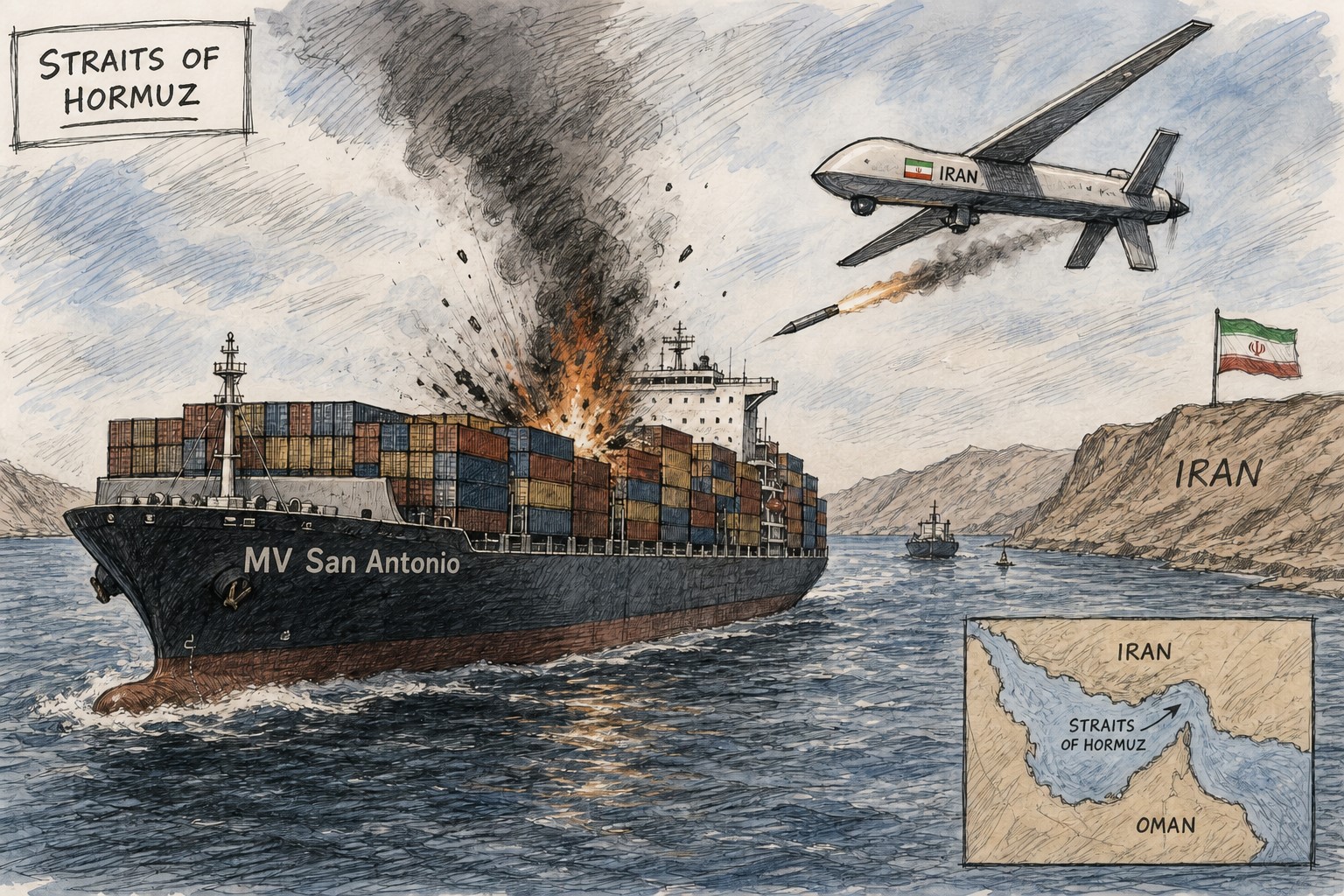
The MV San Antonio was hit on May 5, leaving eight crew members wounded, seven of whom are Filipino nationals, Migrant Workers Secretary Hans Leo Cacdac said at a press briefing at Ninoy Aquino International Airport. Cacdac clarified that the vessel was Malta-flagged, correcting earlier international reports that had identified it as French-flagged.
“It was a drone attack. It was an Iranian drone attack that hit the ship,” Cacdac told reporters.
Four of the injured Filipino seafarers sustained minor injuries, while three others remain under close observation in an intensive care unit due to more serious wounds. Cacdac said all injuries were non-life-threatening, with burns and gas inhalation cited as the primary causes of harm following the explosion triggered by the drone strike.
“Rest assured, the seafarers are alive. They survived the attack, and they had been taken out of the ship,” Cacdac said, adding that all seven are receiving treatment at an undisclosed hospital.
Philippine embassy officials and labor attachés have already established contact with the injured seafarers and coordinated with hospital authorities. Cacdac said government representatives would soon visit the crew members in person to provide further assistance in coordination with the host government. He declined to identify which embassy was involved.
Over 1,400 Filipino Seafarers Exit Strait of Hormuz
The incident comes amid heightened regional tensions in the Middle East that have prompted Manila to closely monitor the movement of its nationals working aboard vessels transiting the strategically vital waterway.
Cacdac said more than 1,400 Filipino seafarers have safely exited the Strait of Hormuz and surrounding waters over the past week, including approximately 92 crew members aboard four vessels that departed the area in recent days.
The Philippine government had earlier imposed restrictions on crew replacements in the Persian Gulf to prevent seafarers from being stranded or exchanged under dangerous conditions. However, Cacdac said those restrictions have since been eased following a ceasefire.
“With the onset of the ceasefire, now we have allowed replacement crew but only for those whose contracts are finished and for those who have been experiencing fatigue or some form of post-traumatic stress,” he said.
The Strait of Hormuz, a narrow waterway between Iran and Oman, is one of the world’s most critical maritime chokepoints, through which roughly 20 percent of global oil supplies pass. Attacks on commercial shipping in the region have drawn international concern in recent years amid broader geopolitical tensions involving Iran.
The Philippines is one of the world’s largest suppliers of maritime labor, with hundreds of thousands of Filipino seafarers employed on vessels worldwide.