







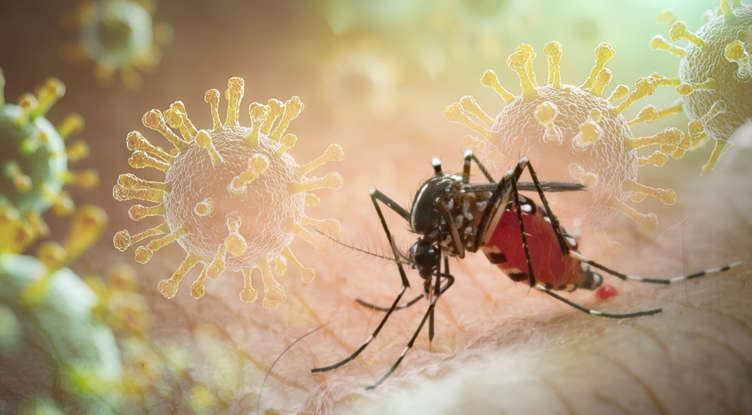
Hong Kong’s health chief warned Sunday that the city faces an ongoing risk of a local chikungunya fever outbreak, with more imported cases likely on the horizon, even as he downplayed the immediate threat of community spread.
Director of Health Ronald Lam, speaking on a Commercial Radio program, said the mosquito-borne illness has already surfaced in nine imported instances this year. But he emphasized that swift detection and hospitalization have kept the danger contained.
“Looking back at those nine cases, several factors stand out. First, fortunately, all were detected early. After the onset of the disease, the patients were quickly hospitalized,” Lam said.
He added that the brief window between symptom onset and admission in Hong Kong minimized opportunities for mosquitoes to pick up and transmit the virus locally. Epidemiological probes found no signs that the patients were bitten by mosquitoes after returning to the city.
“So the risk of local transmission is not high at the moment,” Lam said, though he cautioned that the situation could evolve.
The alert comes amid a global surge in chikungunya, with the World Health Organization forecasting a peak year for outbreaks worldwide. Lam attributed the rise in part to climate change, which is enabling mosquitoes — typically confined to tropical and subtropical areas — to thrive in cooler, temperate regions.
Certain genotypes of the chikungunya virus now circulating globally are also boosting transmissibility through specific mosquito species, he explained.
Lam did not dismiss the chance of sporadic local cases in Hong Kong, a special administrative region of China known as the SAR. Health authorities, he said, will investigate each imported infection thoroughly and collaborate with other government agencies to ramp up mosquito control and prevention measures.
Chikungunya, spread primarily by Aedes mosquitoes, causes fever, severe joint pain and other flu-like symptoms. While rarely fatal, it can lead to debilitating long-term effects. Hong Kong’s subtropical climate makes it vulnerable, but rigorous surveillance has so far prevented endemic transmission.