






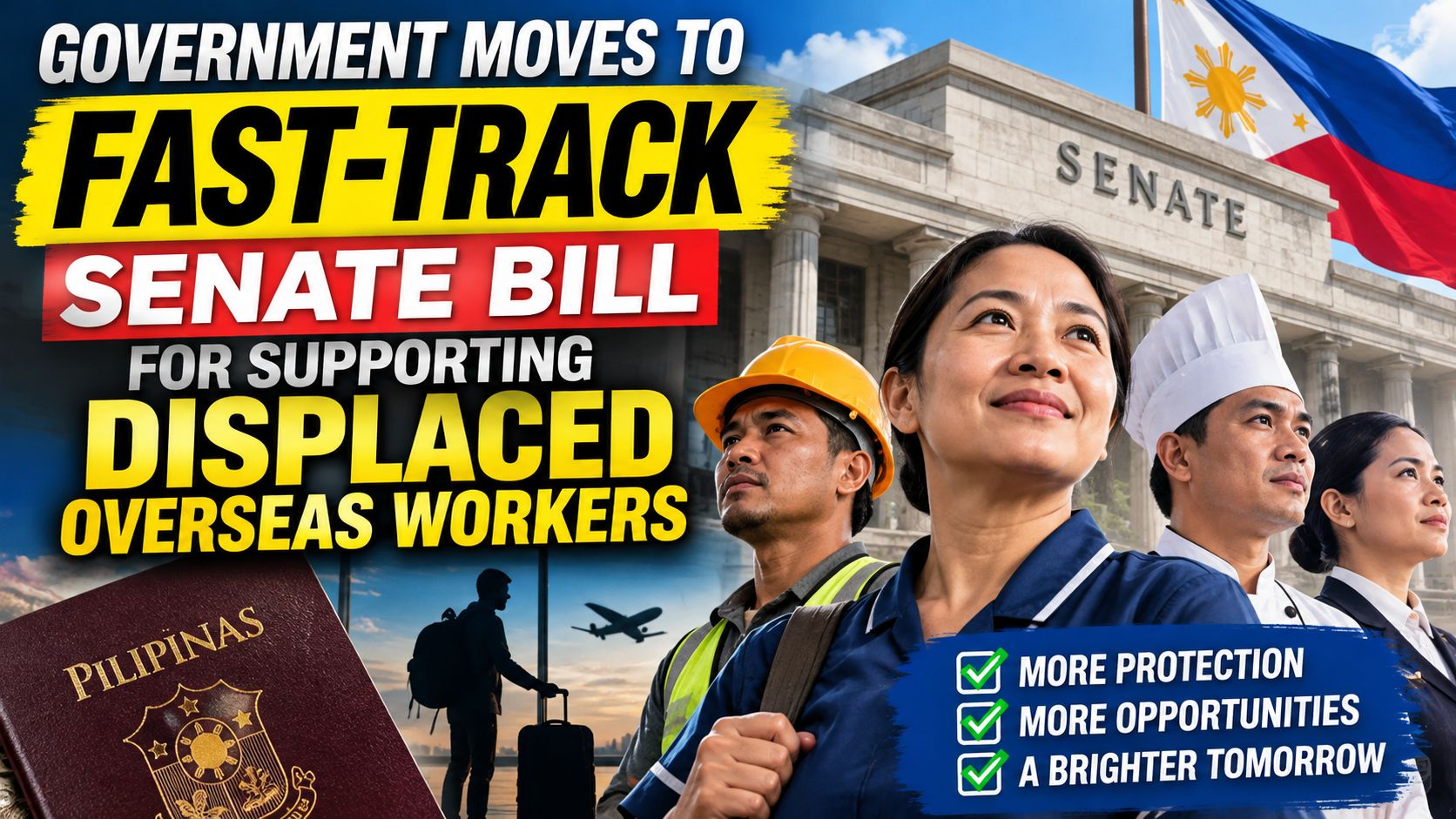
Philippine President Ferdinand Marcos Jr. has certified as urgent a measure aimed at establishing a comprehensive, long-term reintegration framework for overseas Filipino workers, lawmakers said, seeking to insulate returning migrant laborers from global economic and geopolitical shocks.
The certification accelerates the passage of Senate Bill 2423, titled the proposed Bagong Balikbayan Act, which Marcos stated would deliver vital, sustained state assistance to displaced workers. The Senate unanimously approved the legislation on its final reading Thursday, sending it to the House of Representatives for concurrence.
Representative Adrian Salceda of Albay, a co-author of the corresponding House version, said the administration’s intervention ensures government agencies can immediately assist workers upon arrival. Salceda stressed that support systems must be active directly at arrival terminals to direct returning citizens toward employment, entrepreneurship, and social services.
The push for legislative enactment follows mounting labor disruptions abroad, notably layoffs across the Middle East triggered by escalating geopolitical conflicts earlier this year. Millions of Filipinos work overseas, providing vital remittances that support the domestic economy, but they remain vulnerable to abrupt contract terminations, host-country instability, and shifting labor markets.
Under the proposed statute, returning workers—whether land-based or sea-based, documented or undocumented—would receive structured reintegration pathways starting up to six months before their scheduled repatriation. Key provisions include targeted job placement programs overseen by the Department of Migrant Workers, fast-tracked civil service eligibility, vocational upskilling via the Technical Education and Skills Development Authority, and psychosocial counseling.
The House of Representatives had overwhelmingly passed its consolidated version, House Bill 6643, late last year in a 279-0 vote. Lawmakers expect both chambers to reconcile differences and finalize the legislation swiftly following the president’s formal certification.