






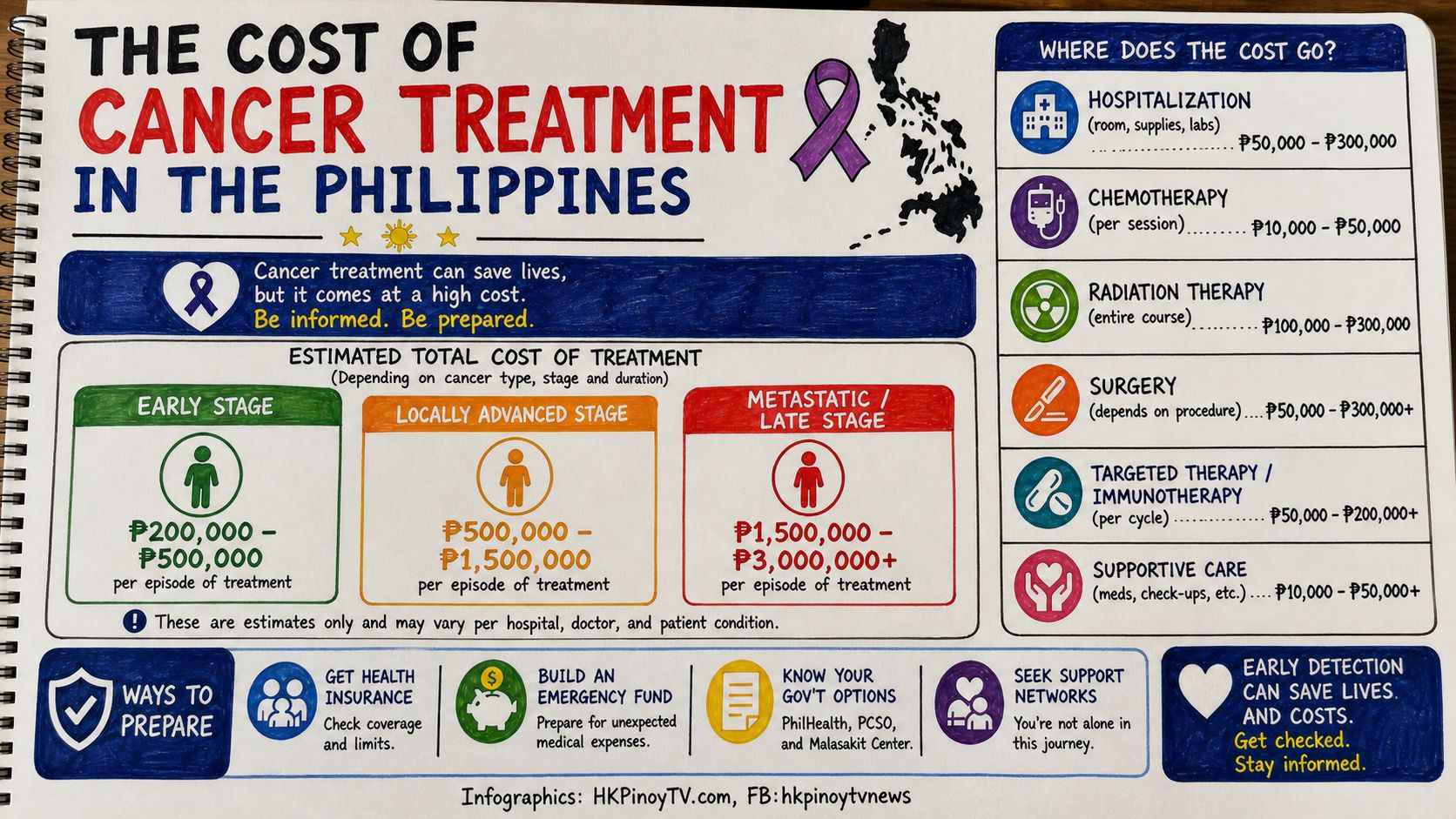
MANILA, Philippines — For many Filipinos, a cancer diagnosis can bring not only a medical emergency but also overwhelming financial strain.
Nena Atanas, a 66-year-old former overseas Filipino worker, said she faced both when doctors diagnosed her with breast cancer in April 2024 after she noticed a swollen lymph node under her arm.
The diagnosis came as Atanas was caring for two sick children. Her son was recovering from surgery after a road accident, while her daughter was undergoing treatment for Stage 1B uterine cancer and needed a hysterectomy.
“At that time, I had a lot of stress because of problems concerning my children,” Atanas told the Philippine News Agency. “I would finish chemotherapy, then stay at the hospital for 24 hours because there was no one else to watch over her.”
During her initial treatment, Atanas said her cancer progressed from Stage 2B to Stage 4 and spread to her lungs. Her weight dropped to 45 kilograms, and the medication left her with little appetite or energy.
Still, she continued treatment and gradually regained weight.
“Back in the day, when you were diagnosed with cancer, it meant a death sentence,” Atanas said. “It was a disease for the rich. You would not have the money for the medicines because they were expensive.”
As a senior citizen, Atanas qualified for the Philippine Health Insurance Corp.’s Z-Benefit Package for Breast Cancer. The program provides up to 1.4 million pesos in assistance for eligible patients with breast cancer from Stage 0 through Stage 4.
The benefit covers a range of services, including diagnostic tests, surgery, chemotherapy, hormone therapy, targeted treatment and post-treatment monitoring. Patients already receiving treatment may still enroll, and the program is open to eligible members, including senior citizens and former overseas workers.
At Rizal Medical Center, Atanas received 15 cycles of oral chemotherapy and eight cycles of chemotherapy over two years. Her doctors later said tumors in her breast and lungs had shrunk.
She underwent a mastectomy in May at Cardinal Santos Medical Center after being referred there because of backlogs at public hospitals.
“I didn’t pay anything — zero balance, not even a single peso,” Atanas said.
Her surgery and 15 post-operative radiation sessions were covered by PhilHealth and the Health Department’s Zero Balance Billing policy. Rizal Medical Center also supplied her Letrozole medication through its social service program.
Atanas said her main expenses were transportation — about 100 pesos for four jeepney rides to radiation appointments — and 245 pesos for unscented lotion to relieve radiation burns.
Without the assistance, she said, the treatment would have been beyond the means of her family, which depends largely on the income of a relative working at a call center.
A biopsy after the mastectomy found no remaining cancer cells, Atanas said. She is completing her final radiation sessions and preparing to begin zoledronic acid treatment to help protect her bones.
For Atanas, the coverage made the difference between treatment and financial ruin.