




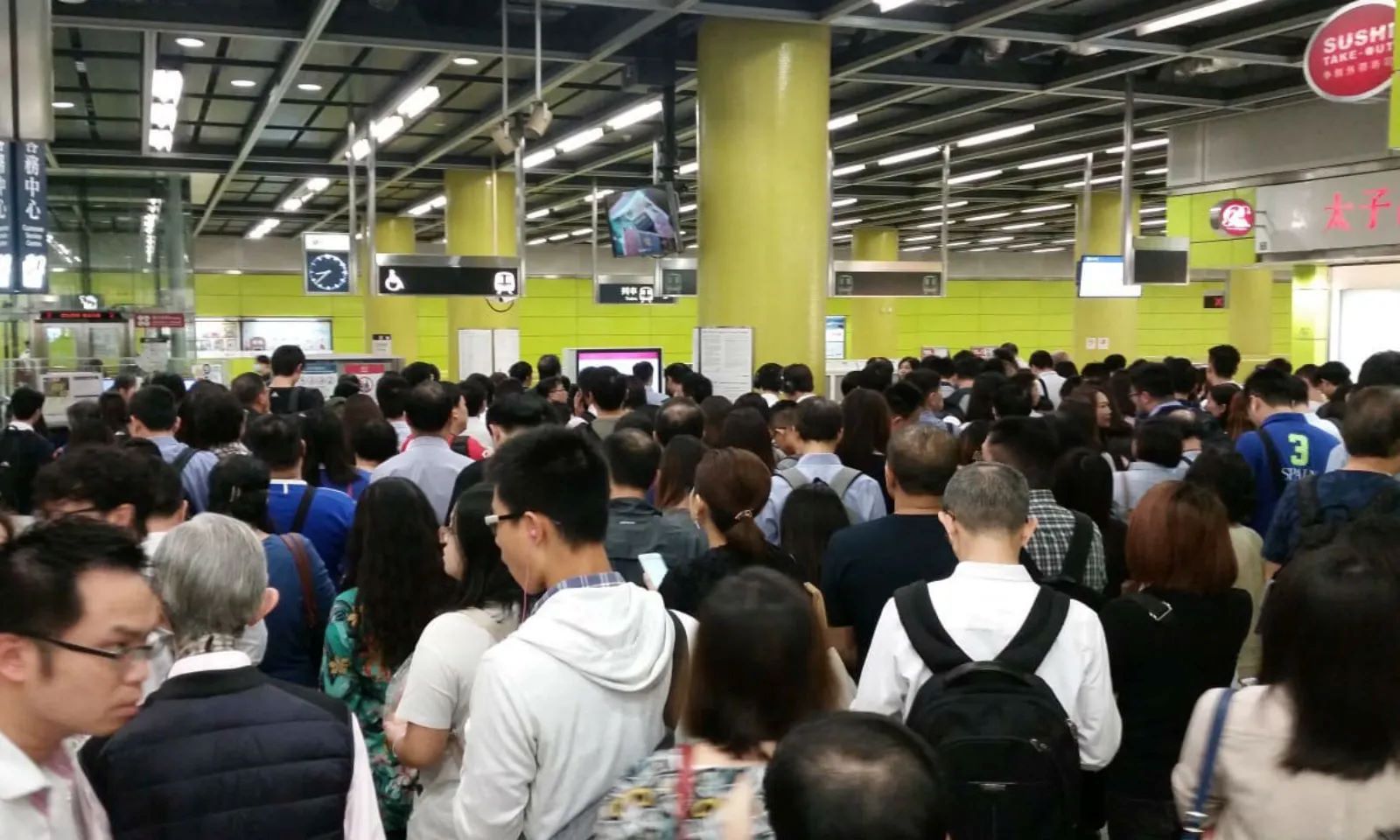
A major breakdown on Hong Kong’s MTR Tseung Kwan O Line stranded thousands of commuters during Thursday evening’s rush hour, halting services for nearly five hours due to a short-circuit in an overhead cable, the MTR Corporation said. The failure, which also disrupted signaling equipment, has sparked renewed calls for infrastructure upgrades and better communication with passengers.
The suspension began when a circuit breaker tripped, causing a cascade of malfunctions in the tunnel’s electronic systems, according to Henry Cheung Nin-sang, chairman of the Association of Hong Kong Railway Transport Professionals. Speaking on a radio program Friday, Cheung explained that the signaling system automatically shut down as a safety measure after the power fault.

“Overhead cable short circuits can arise from issues like power substation failures or faulty train components,” Cheung said, noting that while the MTR employs dual power supply systems to prevent simultaneous failures, the incident raises questions about aging infrastructure. The affected section, designed over 30 years ago, relies on outdated technology requiring manual fuse replacements—a process far slower than modern systems with automatic resets.
The disruption has intensified scrutiny on the MTR’s long-delayed signaling system upgrade, stalled for nearly a decade. Cheung urged prioritization of the project to reduce future risks, emphasizing that visual inspections alone cannot detect issues like loose components in overhead cables. He recommended advanced tools, such as ultrasonic or infrared sensors, for more thorough monitoring.
Lawmaker Gary Zhang Xinyu, a former MTR station services manager, visited Quarry Bay Station during the incident and criticized the company’s response. “Passengers were left in the dark about the extent of the delay,” Zhang said on the same radio program. He called for clearer communication to help commuters make alternative travel arrangements.
Cheung acknowledged the MTR’s rigorous maintenance of cables, signaling systems, and tracks but noted that unexpected failures remain a challenge. Engineers struggled to diagnose Thursday’s fault, prompting Cheung to advocate for faster deployment of real-time sensors across the network. While some sections already use such technology, full implementation is still pending.
The incident also raised concerns about potential design flaws, as the typically independent power and signaling systems failed in tandem. Cheung stressed the need for enhanced staff training to address such issues swiftly.
The MTR could face a penalty of up to HK$18 million ($2.3 million USD) for the disruption, Cheung estimated, though the final amount will depend on operational data submitted to the government.
The outage underscores broader challenges for Hong Kong’s MTR, a critical artery for millions of daily commuters, as it grapples with modernizing an aging network amid growing passenger demands.