





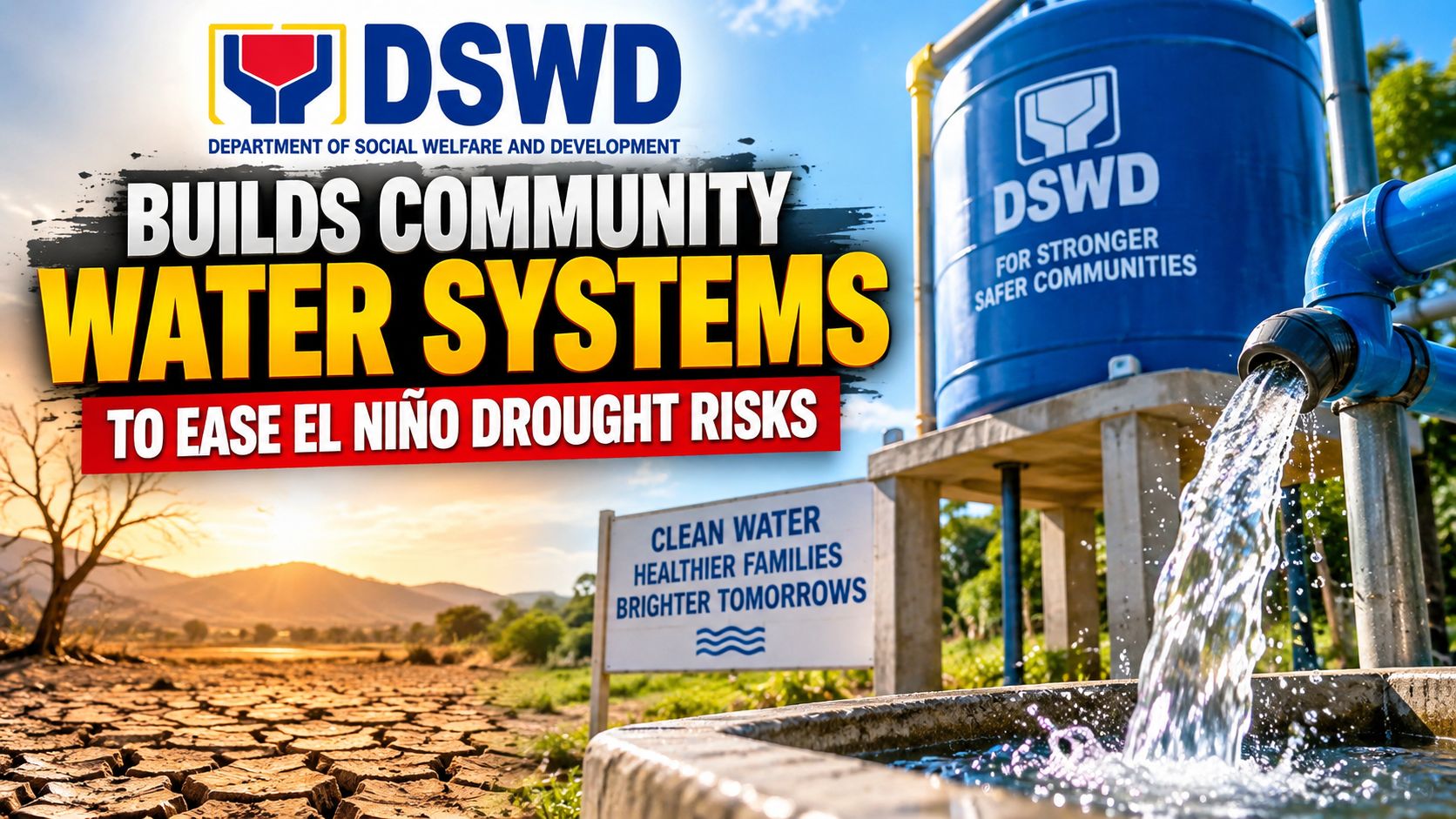
The Philippine government is building and rehabilitating water systems to help communities cope with drought linked to El Niño, with residents helping choose and manage projects, the Department of Social Welfare and Development said Monday.
The department’s KALAHI-CIDSS community development program has supported 4,803 water systems worth about 5 billion pesos since 2003, according to program data through Sept. 30.
National program manager Bernadette Mapue-Joaquin said the initiative helps communities develop infrastructure to address water shortages, particularly in areas with limited natural water sources.
Completed projects include 76 rainwater collection and catchment systems serving about 10,664 households across several regions, the department said. The systems provide alternative water supplies, including for residents of geographically isolated and disadvantaged areas.
The program gives communities funding, control over project selection and training to help them maintain completed infrastructure.
Under its Philippine Community Resilience Project, local governments also work with residents to identify hazards, assess vulnerabilities and plan responses.
Program records show 103 municipalities identified severe drought as their main hazard and implemented 200 projects to reduce its effects.
Those projects include solar-powered pumping units, shallow wells, rainwater harvesting facilities and the construction or rehabilitation of water systems. The department said they support drinking water and sanitation needs, agriculture and livelihoods.
The agency aims to expand the resilience project to 880 municipalities, with a World Bank loan funding local resilience planning in the first 500.
Mapue-Joaquin said involving residents in planning and construction helps encourage long-term maintenance.
She cited the Molatuhan Bajo waterworks system in Lopez Jaena, a municipality in Misamis Occidental province, as an example. The system has remained operational and well-maintained since 2008, helping address the community’s water shortage, she said.
The municipality’s management of the system was recently recognized at the program’s local government awards in Bacolod City.