








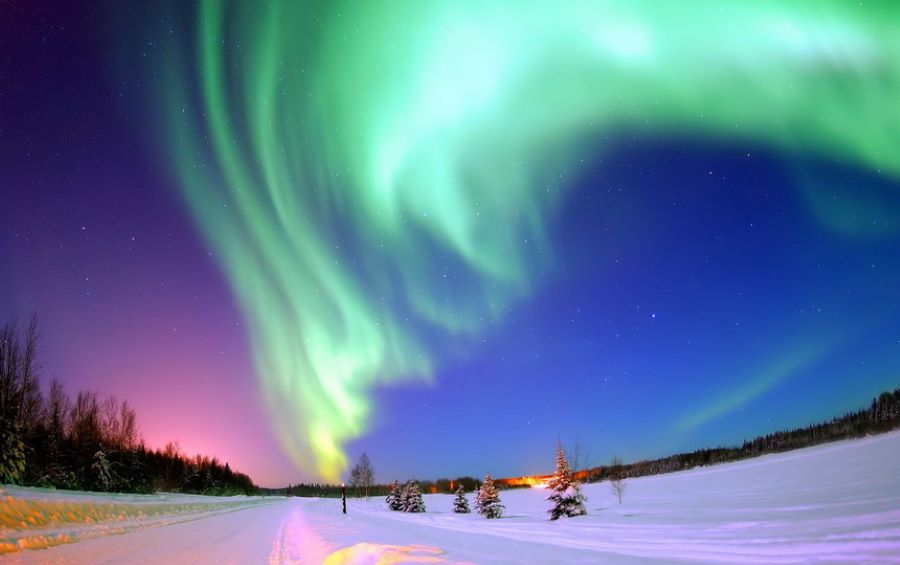
MOHE, China — As the sun reaches the height of its 11-year activity cycle in 2025, Chinese travelers are increasingly heading to the country’s far north to catch the northern lights, discovering a bucket-list spectacle that costs a fraction of trips to Scandinavia.
Once a rare sight requiring expensive flights to Norway, Finland or Iceland, the aurora borealis is now a major draw in domestic destinations like Heilongjiang province’s Mohe — China’s northernmost city, often called its “Arctic Village” — as well as Xinjiang’s Altay region and Inner Mongolia’s Hulunbuir grasslands.
Multi-day aurora-chasing packages in these areas typically range from 3,000 to 8,000 yuan ($420–$1,120), compared with 30,000 yuan or more for Nordic equivalents, according to travel agencies.
The surge in interest has been fueled by intense solar activity during the current solar maximum, which scientists say is producing more frequent and vivid displays. China’s National Space Weather Monitoring and Warning Center forecasts stronger geomagnetic storms through 2025, pushing the lights into view across northern high-latitude zones.
In Mohe, which borders Russia and blends Chinese and Russian architectural influences, temperatures routinely plunge below -30 Celsius (-22 Fahrenheit) in winter, transforming the region into a frozen landscape of snow-covered forests and ice-bound rivers. The extreme cold, long nights and minimal light pollution make it one of China’s premier aurora spots.
Recent displays have been spectacular. On New Year’s Day 2025, vivid red, green and purple auroras danced over Mohe, delighting tourists who lined the frozen banks of the Heilongjiang River. Similar sightings have been reported in Altay and Hulunbuir, with some events lasting hours.
Local governments and travel platforms have aggressively promoted the phenomenon on social media, offering guided night tours, heated viewing platforms and professional photography services. In Mohe, new facilities include aurora camps and even an indoor dome theater simulating the lights for guaranteed viewing.
Tour operators report bookings for the 2024-2025 winter season are several times higher than previous years, with many packages sold out through the Lunar New Year. Analysts attribute the boom to rising incomes, a post-COVID preference for domestic travel and the rare alignment of peak solar conditions making the aurora more accessible than ever within China’s borders.