


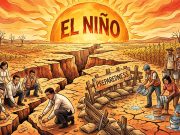
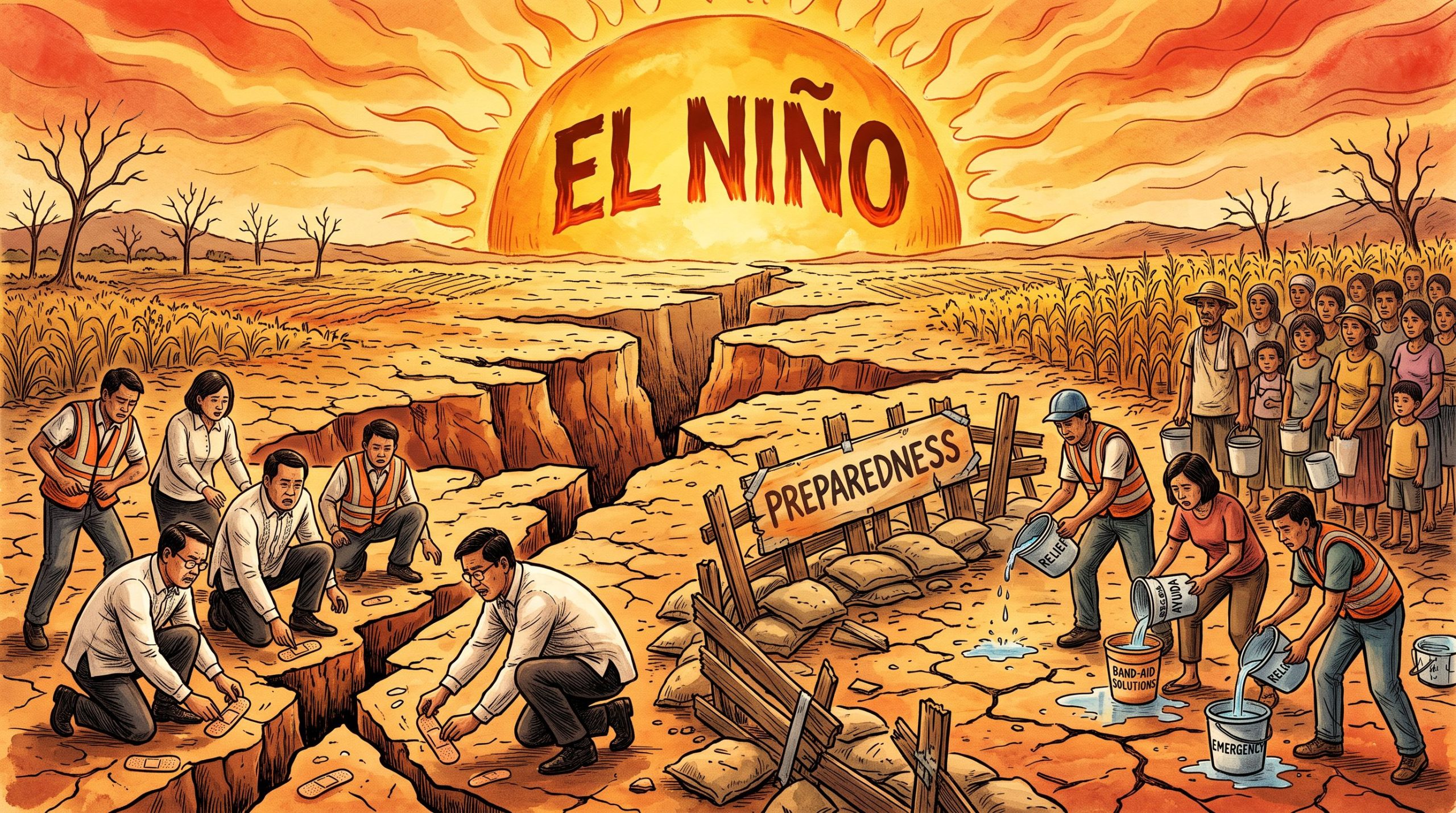
As the Philippines braces for months of severe drought, questions are intensifying over whether the state could have prepared far more effectively for a slow-moving crisis predicted well in advance. Following the declaration of the 2026–2027 El Niño event by the World Meteorological Organization and local warnings issued as early as March, public anxiety has grown palpable. Despite assurances from Trade Secretary Cristina Roque that basic commodities remain stable and that citizens should refrain from panic buying, recent demonstrations by social welfare officials—showcasing government-issued filtration devices to purify bucket-collected rainwater—have backfired, intensifying public frustration and sharpening criticism from disaster risk experts.
A central issue raised by analysts is the tendency of the state to romanticize citizen resilience rather than fixing vulnerable infrastructure. Disaster anthropologist Pamela Cajilig noted that shifting crisis management onto ordinary citizens, many of whom are already navigating high living costs, fuels public distrust and raises serious practical questions regarding the durability of household filtration devices over a prolonged crisis. Echoing this sentiment, humanitarian assistance researcher Keith Paolo Landicho observed that citizens are exhausted by having their resilience celebrated while systemic gaps remain unaddressed, characterizing the reliance on rainwater buckets as a temporary stopgap masquerading as genuine national preparedness.
The nation’s reactive posture is particularly troubling given the long history of severe climate phenomena in the region. Ven Paolo Valenzuela, a research fellow at Singapore Management University, emphasized that nearly three decades after the catastrophic 1997 El Niño, the country has made little progress in putting comprehensive water infrastructure into place. The government’s decision to curb water allocations for Metro Manila stands as direct evidence of this persistent shortfall, highlighting an inability to execute decade-long planning strategies to shield populations from entirely predictable hazards. While non-governmental partners like Waves for Water have supplied valuable emergency filters, their leadership acknowledges that technological stopgaps cannot substitute for a coordinated, whole-of-society approach that integrates local and national governance, private investment, and sustained community water stewardship.
This sluggish structural progress places the Philippines at a notable disadvantage compared to its regional neighbors. While Manila depends on emergency rations and household coping mechanisms, countries like Vietnam have poured significant investments into permanent infrastructure, such as modern irrigation networks and Mekong River sluice gates constructed in the wake of previous dry spells. Similarly, Thailand has advanced its predictive climate databases, and Indonesia has established localized drought emergency protocols to protect communities before shortages cascade out of control.
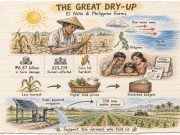
Compounding the urgency is the distinct nature of slow-onset climate disasters, which lack the immediate spectacle of super typhoons but inflict far deeper, prolonged economic damage over time. Experts warn that leaving the effects of drought unaddressed allows economic strain to linger across society, with the agricultural sector positioned to bear the most devastating brunt. Athea Penaloza of the Asia-Pacific Alliance for Disaster Management stressed that without urgent, targeted state support for farmers, the country faces sharp drops in domestic food harvests, intensified price spikes, and broader threats to national food security extending well into next year. For a hazard forecasted months ahead of time, critics warn that unless the government shifts from temporary band-aids to aggressive structural intervention, ordinary Filipinos will once again pay the highest price for systemic delay.